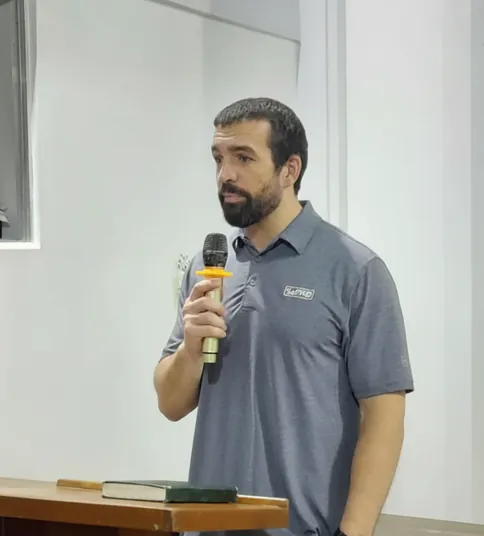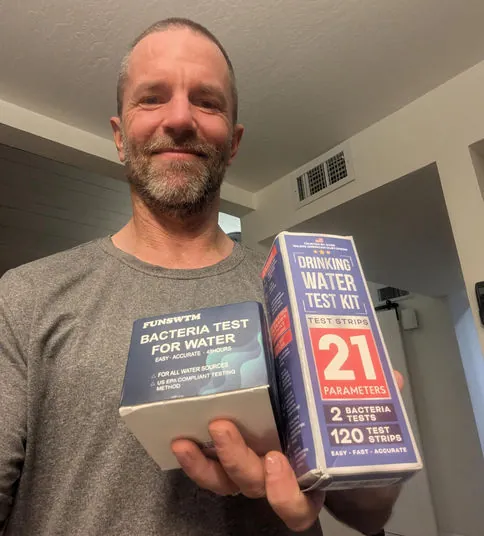
System one running. System two in design.
Status as of September 28, 2026
Our first system, installed at a local church in Mariveles in spring 2026, passed its post-installation bacteria test and now serves about 100 to 200 people a day. Local officials have shown interest in a follow-up system at the Biaan Aeta Integrated School, a “last mile” school for indigenous Aeta children and low-income families. That system is in design.
- Scout communities2024–2025
- Build system oneMar–May 2026
- Design the school systemNow
- Build & trainNext
- 2024–2025Founder-funded trips to find communities that need safe water.
- Aug 2025Site visit and measurements at the church in Mariveles.
- Sep 2025First system designed around ultrafiltration.
- Mar–Apr 2026Equipment bought and installed with local volunteers: prefilters, ultrafiltration and UV.
- May 2026Post-installation test: no coliform bacteria detected. Statement of proficiency issued.
- Jun 2026Local officials show interest in a system for the Biaan Aeta Integrated School.
- NowDesigning a passive filter-and-UV system for the school.
- NextBuild it, train staff, and hand it over.
From the field
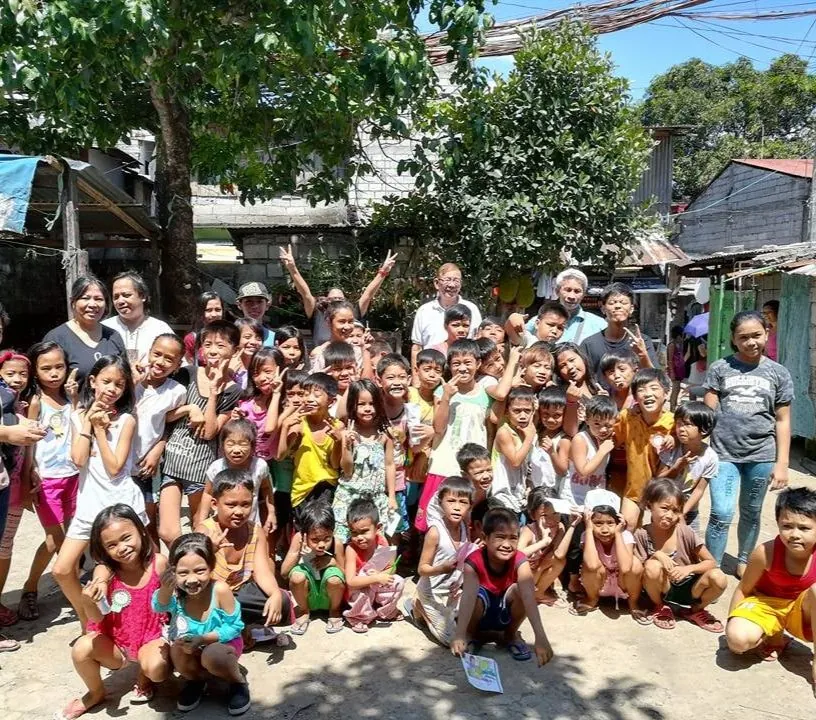
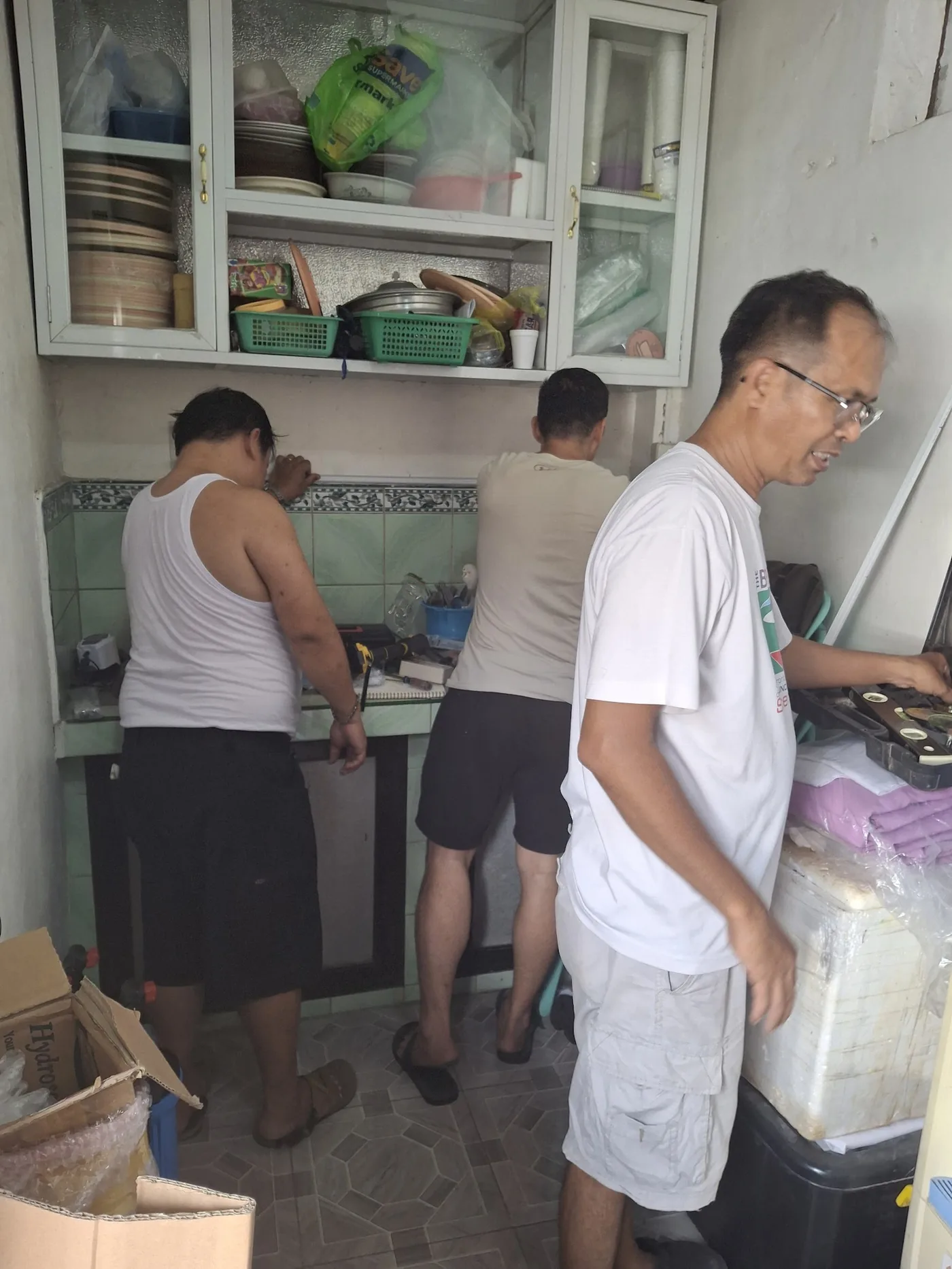
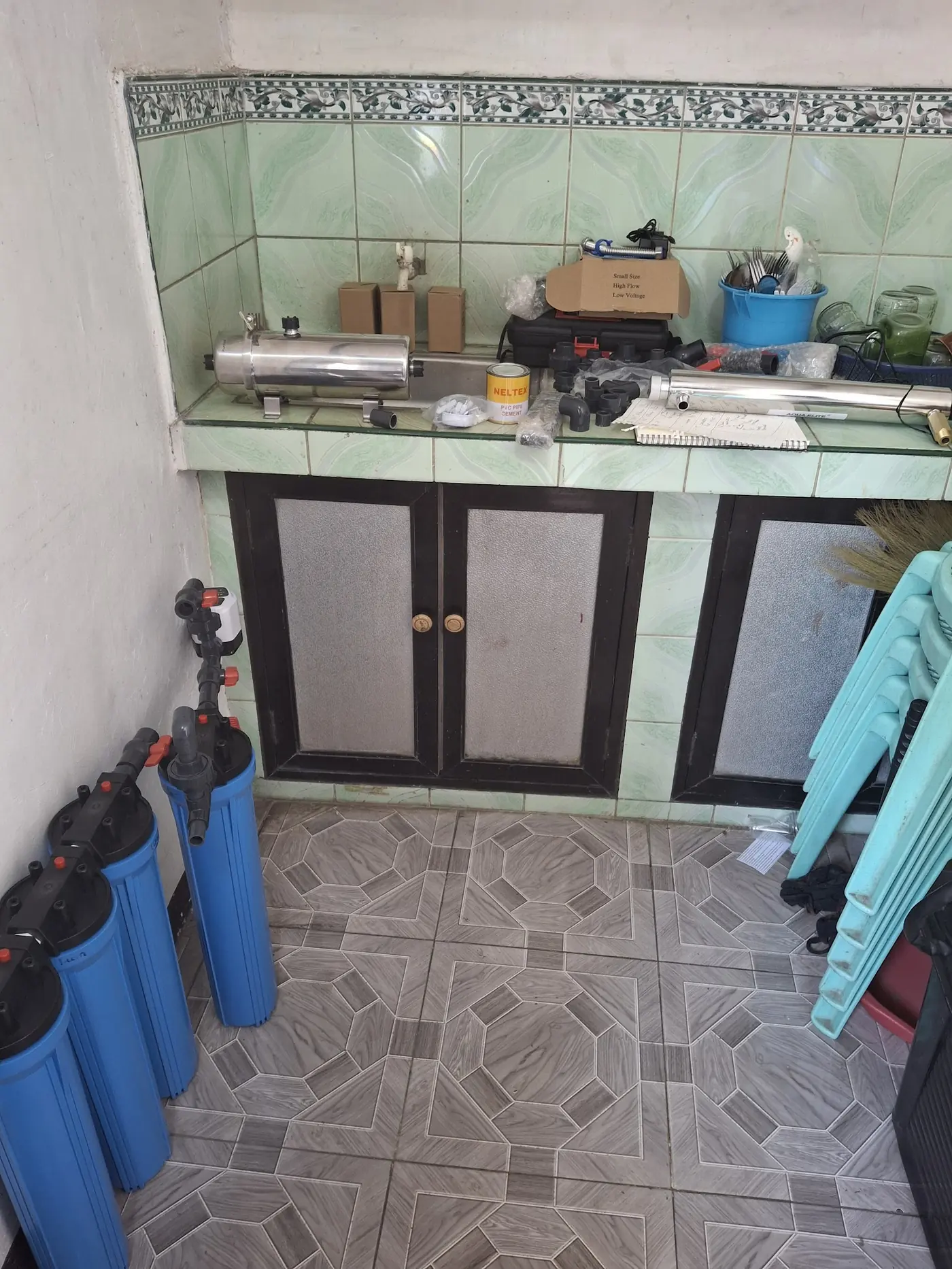
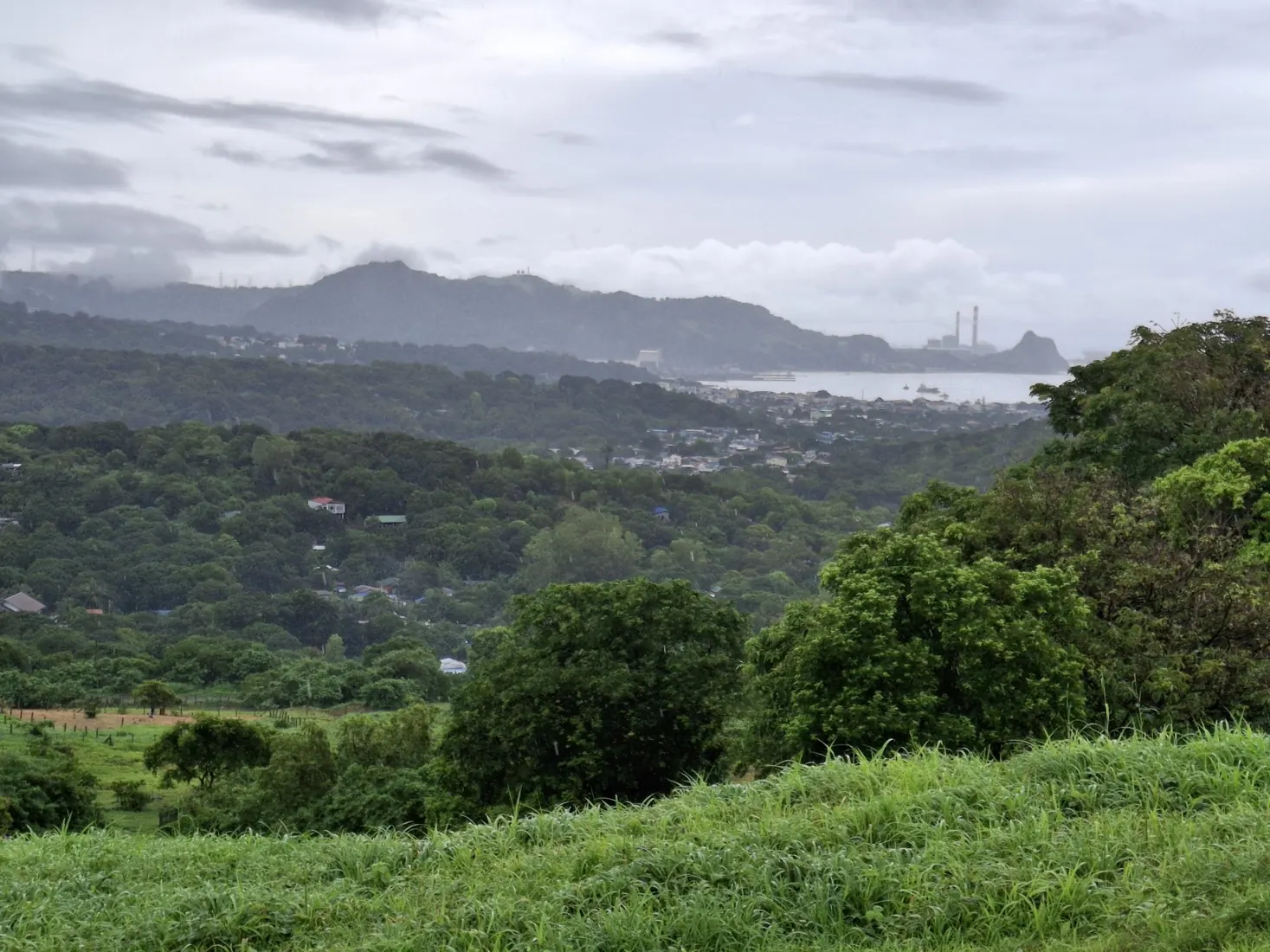
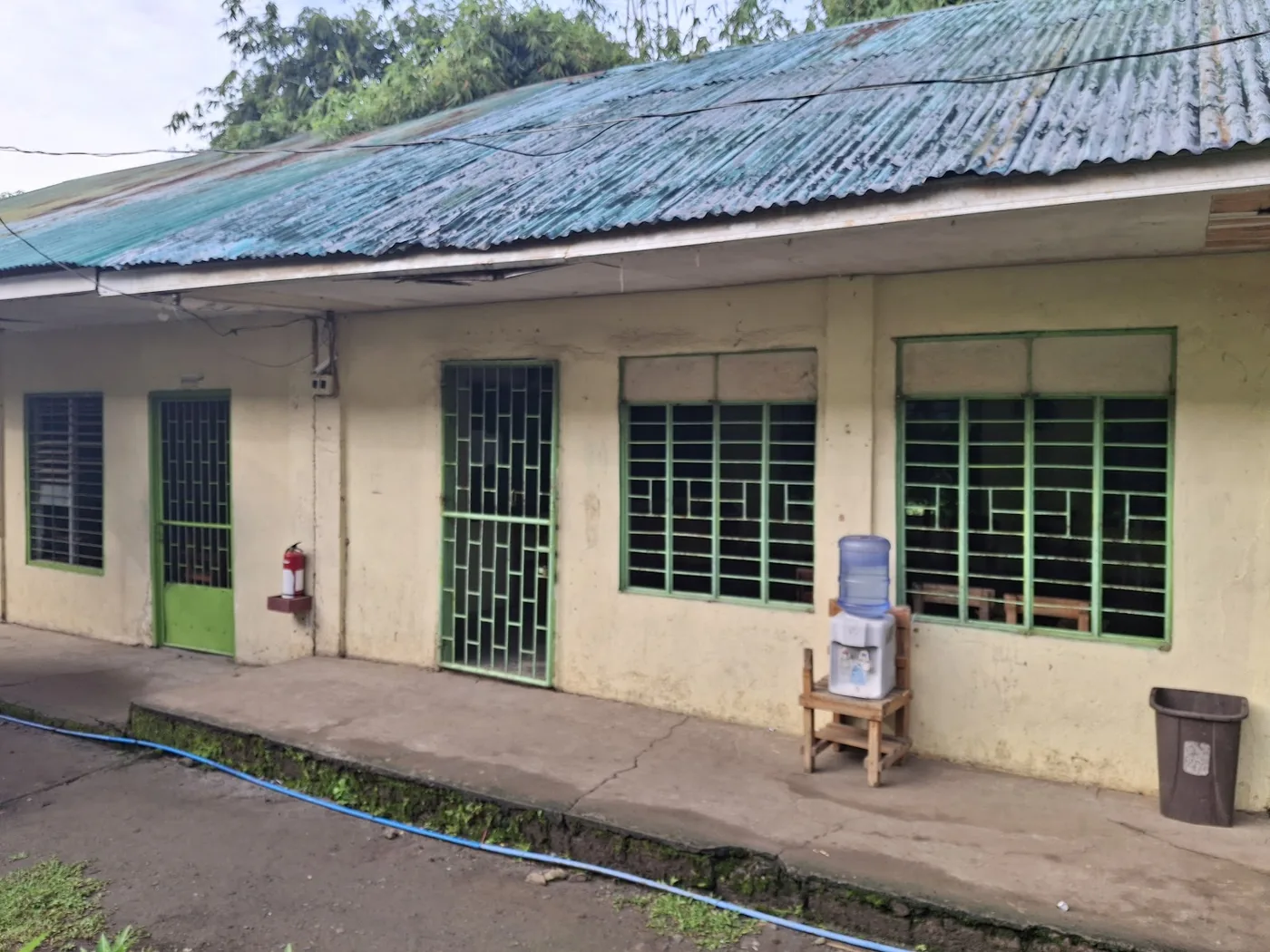
Photos: Clean Water Help and local partners.
Learn more
The short version is above. Open any section for the details, or download the full report below. For the science behind this system, read our brief on ultrafiltration and combined treatment.
The challengeWater is available, but safe water costs money
In Mariveles, tap water is available but not safe to drink, so families buy purified water. For many, that cost adds up, and some drink from unsafe sources to save money. Children often go without water during the day.
How system one worksFour prefilters, ultrafiltration and UV
The system taps the church’s water line and treats it in stages:
- A small booster pump
- Four prefilters: washable sediment, 5 micron, activated carbon and 1 micron
- An ultrafiltration membrane with 0.01 micron pores (about 1,000 L per hour) that removes bacteria and parasites
- A 25 W UV lamp as a second barrier, with automatic shutoff
- A tap on the outside wall so neighbors can fill containers
Local volunteers change prefilters every 6 to 12 months, the membrane every 1 to 2 years and the UV bulb every 2 to 3 years. We broke a UV lamp during setup and learned to pack a spare.
ResultsNo coliform bacteria detected; 100 to 200 people a day
After installation, a total coliform test found no coliform bacteria in the treated water. The system now serves about 100 to 200 people a day, and the church’s volunteers run it. The whole system cost $533.
Next: the Biaan Aeta Integrated SchoolAbout 500 people a day
The Biaan Aeta Integrated School, in Sitio Biaan, Barangay Maligaya, Mariveles, is a “last mile” school that brings together indigenous Aeta children and children from low-income coastal families. Its water line runs through erosion-prone ground; when the pipe cracks, mud and bacteria get in. We are designing a passive ultrafiltration and UV system that needs no storage tank or booster pump, at an estimated cost of about $700, to serve about 500 people a day.
Other communities we are scopingTarlac, Mindoro and Palawan
We have visited or are talking with communities in Tarlac (a mountain school whose students pay for drinking water), Mindoro and Palawan (indigenous communities without treated water). Each needs a local host and a trained caretaker before we build.
Project ReportPhilippines: Safe Drinking Water in MarivelesDownload the full project report
How the first system was designed, built and tested, what it costs to run, and the plan for the Aeta school. Updated September 2026.
The team behind it
Volunteer scientists and engineers donating their expertise to this project. Most names link to their work.