Safe Drinking Water in Mariveles, Philippines
Our first Philippine community system, at a local church in Mariveles, Bataan, passed its bacteria test and serves 100 to 200 people a day. This report covers the design, results, running costs and the next system for an indigenous Aeta school.
Clean Water Help is a 100% volunteer-run 501(c)(3) nonprofit (EIN 99-0765687). Founders cover all operating costs, so 100% of public donations go to projects. Numbers are current as of September 28, 2026. Photos are shared by partners with permission; names of private individuals are withheld. impact@cleanwaterhelp.org
At a glance
1 Executive summary
Clean Water Help’s founder scouted Philippine communities in 2024 and 2025. Mariveles, about two hours from Manila, was chosen because water there is available but not safe, and a local church offered to host and operate a system.
The system was designed in September 2025, and the equipment was bought and installed in March 2026. A total coliform test after installation was negative, and a statement of proficiency was issued in May 2026. The system now serves about 100 to 200 people a day.
Local officials have shown interest in a follow-up system at the Biaan Aeta Integrated School, a last-mile school for indigenous Aeta children and low-income families. Its system is in design.
What happens next
- Finish the design for the Biaan school (passive UF + UV, no booster pump or break tank).
- Raise about $700 and build the system with school staff.
- Train two caretakers and leave a maintenance schedule and spare parts.
- Test water after installation and again after six months.
Key numbers and how solid they are
Each number is labeled by its basis: Measured counted or tested, Reported reported by a partner or a document, Record from our own payments, contracts and correspondence, Estimate a calculation or assumption, Planned a plan or target, not yet done.
| Item | Value | Basis | Source |
|---|---|---|---|
| People served per day (system one) | 100–200 | Reported | Local operators and CWH, 2026 |
| System cost | $533 | Record | CWH project tracker |
| Post-installation coliform test | Negative | Measured | Statement of proficiency, May 6, 2026 |
| UF capacity | about 1,000 L per hour | Record | Equipment specification |
| Biaan school target | about 500 people a day | Planned | CWH plan |
| Biaan school cost | about $700 | Estimate | CWH plan |
2 Background and progress
Why Mariveles
Mariveles is on the southern tip of Bataan, about two hours from Manila. Water is available, but not safe to drink, so families buy purified water, and some choose unsafe sources to save money. A local church offered to host a system and provide volunteers to run it.
What we built
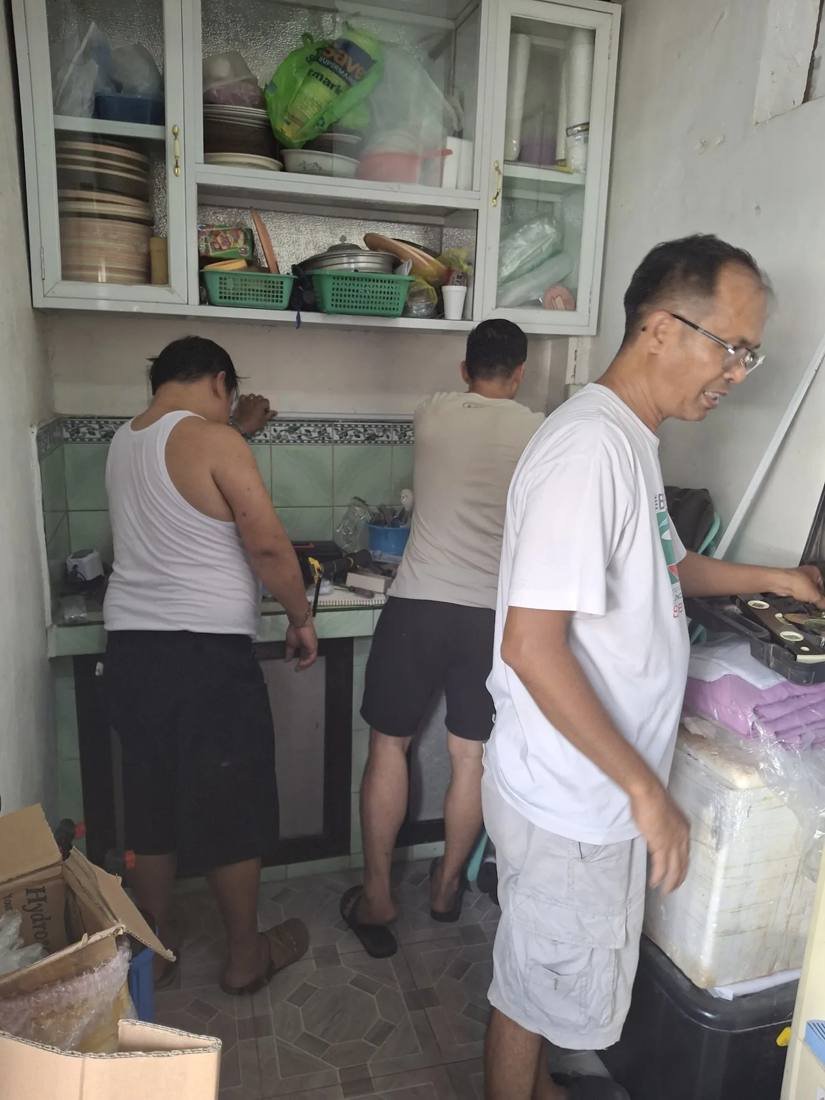
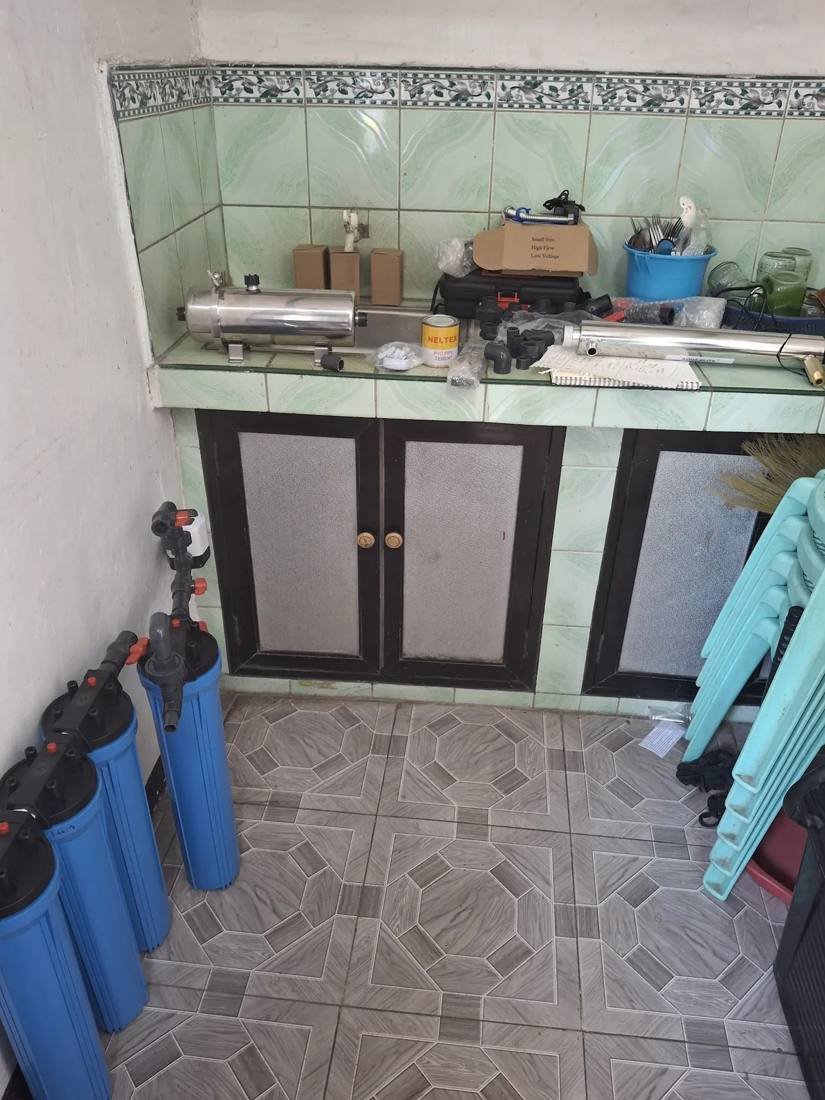
We measured the church’s water line in August 2025 and designed a compact system that fits in a cabinet between two rooms, with a tap through the wall to the street. Equipment was bought in March 2026 and installed with local volunteers.
The next community
The Biaan Aeta Integrated School in Sitio Biaan, Barangay Maligaya, is a K–12 “last mile” school serving indigenous Aeta children and low-income coastal families. Its water line crosses erosion-prone ground and cracks, letting in mud and bacteria.
Timeline
- 2024–2025Founder-funded scouting trips.
- Jul 7, 2025Philippines fundraiser launched.
- Aug 21–23, 2025Mariveles site visit.
- Sep 2025System design and project plans.
- Mar 12, 2026Equipment purchased.
- Mar–Apr 2026Installation.
- May 6, 2026Coliform test negative; statement of proficiency.
- Jun 8, 2026Local officials show interest in a system at the Aeta school.
- NextBuild the Biaan school system.
3 Technical foundation
System one design
| Stage | Purpose | Replace |
|---|---|---|
| Booster pump | Steady pressure from a low-pressure line | As needed |
| Washable sediment prefilter | Removes sand and rust | Clean as needed |
| 5 micron cartridge | Fine particles | 6–12 months |
| Activated carbon | Taste, odor, chlorine | 6–12 months |
| 1 micron cartridge | Protects the membrane | 6–12 months |
| Ultrafiltration, 0.01 micron | Removes bacteria and parasites | 1–2 years |
| UV lamp, 25 W | Second barrier; inactivates germs | 2–3 years |
Why ultrafiltration, not reverse osmosis. Reverse osmosis wastes water, needs more pressure and strips minerals. Ultrafiltration removes germs while keeping minerals, and the UV lamp adds a second barrier.
School system concept
For the Biaan school, a passive manifold of prefilters, ultrafiltration and UV mounted on the incoming line, with no break tank or booster pump, to keep it simple for school staff.
Decisions and the options we set aside
| Decision | Options considered | Why |
|---|---|---|
| UF + UV, two barriers | UV only; reverse osmosis | Two independent barriers; keeps minerals; low water waste. |
| Host at a church, then a school | Household filters | A trusted host and volunteers keep a shared system running. |
| Keep designs standard | Custom design each time | Easier to train caretakers and stock spare parts. |
Risks and how we respond
| Risk | Level | Response |
|---|---|---|
| Missed maintenance | Medium | Trained caretakers, log sheet, spare parts. |
| Power outages stop the pump and UV | Medium | Passive design at the school; auto shutoff. |
| Line breaks let in mud | Medium | Prefilters sized for turbidity; flush after breaks. |
4 What we learned and what is still open
- Bring a spare. We broke a UV lamp during commissioning; spares are now standard.
- Hosts make systems last. A trusted local host with volunteers is as important as the equipment.
Open questions
- How many people use the church system on weekdays versus weekends?
- What is the best power backup for school systems?
- Which of Tarlac, Mindoro and Palawan is ready for the next build?
5 How you can help
Bring safe water to a school
About $700 builds a system for the Biaan Aeta Integrated School.
- Give: gofundme.com/f/philippines2025
- Contact: impact@cleanwaterhelp.org
References and sources
- Clean Water Help. Statement of Proficiency, Mariveles system (May 6, 2026).
- Clean Water Help. Community Water Initiatives in the Philippines, project plans (September 2025).
- Clean Water Help Philippines team meeting (June 8, 2026).