Heavy metals & arsenic from mining
Mining doesn’t only spill mercury and cyanide. When sulfide rock in mine waste meets air and water, it makes sulfuric acid, and that acid dissolves lead, cadmium, copper, and arsenic straight into the rivers people drink and the fields they farm. Heavy metals follow predictable chemistry. Raise the pH, add the right binding agent, and they drop back out of the water. This brief sets out the methods for doing that.
Acid mine drainage: the main cause of the problem
The central mechanism is acid mine drainage (AMD). Sulfide minerals exposed in mine waste react with water and oxygen to form sulfuric acid, dropping the water to pH 2.5–4. At that acidity, heavy metals that would otherwise stay locked in rock (lead, cadmium, arsenic, copper, manganese) dissolve directly into the watershed. Communities downstream drink the result; the same water irrigates farmland, and lead, cadmium, and arsenic accumulate in rice, vegetables, and root crops. AMD is estimated to cause on the order of $50 billion in economic damage worldwide each year.
One principle organizes everything below: acidity makes every metal more soluble. So the first step is almost always raising the pH.
Step 1: raise the pH
Because acidity keeps metals in solution, neutralizing the water is the cheapest first move, and often does much of the job on its own. As pH climbs toward neutral, many dissolved metals precipitate out.
Anoxic limestone drains
A buried bed of crushed limestone that AMD flows through. Under acidic, oxygen-poor conditions the limestone dissolves, raising pH and driving iron and aluminum to precipitate. It is cheap, completely passive, and well suited to moderate AMD loads, but it plugs over time and needs limestone replacement every 5–15 years. Dolomite or limestone dosing works on the same principle where a drain isn’t practical, and adds beneficial calcium and magnesium to the water.
Step 2: passive polishing with constructed wetlands
For an active mine generating AMD, a multi-cell constructed wetland treats the flow with no power and a 10+ year life. It works in three stages:
| Cell | What it does | Mechanism |
|---|---|---|
| Cell 1: Phytoremediation | Takes up metals, raises pH | Papyrus, cattails, or vetiver roots exude acids/oxygen; as pH rises, iron precipitates as ferric hydroxide flocs that adsorb arsenic, lead, and other metals. |
| Cell 2: Biochar | Adsorbs remaining metals | Charcoal made from agricultural waste gives a large surface area for further metal and organic adsorption. |
| Cell 3: Sand + clay | Polishing filter | Removes residual fine particulates; water exits near-neutral with metals 95%+ below input. |
The trade-off is space and upkeep: footprint runs 100–1,000 m² per typical artisanal mine, the plants must be harvested periodically (the metals are now in their tissue, not the water), and the biochar is replaced every 5–10 years. Low operating cost, no power, locally constructable.
Step 3: active treatment for drinking water
Where a community is already drinking metal-laden water, reactive treatment removes what escaped upstream. Three technologies cover most cases, and the choice turns on the contaminant profile and the community’s capacity to operate the system.
| Technology | Best for | How it works | Trade-off |
|---|---|---|---|
| Ferric chloride coagulation | Arsenic; most mining-derived metals | Iron hydroxide flocs adsorb dissolved arsenic and metals; settling tank or filter removes the flocs. | Very effective on As. Running cost is under $0.05/L in very small systems and under $0.01/L at industrial scale; generates iron-metal sludge to dispose of. |
| Activated alumina | Arsenic at near-neutral pH | Granular alumina preferentially adsorbs arsenic and metal oxyanions; cartridges replaced periodically. | Excellent for As; recurring cartridge cost and supply-chain reliance. |
| Ion exchange | Low or varied metal concentrations | Synthetic resin swaps harmless ions for target metal ions; regenerated with brine or acid. | Cleaner output, works where coagulation is inefficient; higher capital cost. |
Per-person figures spread the capital cost over the system life and the people served (3.8 L per person per day). Chemicals, media, sludge disposal and labor are extra. For ferric chloride they are the larger share: under $0.05/L in very small systems (up to ~$70 per person per year) and under $0.01/L at industrial scale.
Active mine generating AMD? Multi-cell wetland: passive, durable, suited to artisanal flow rates and community upkeep.
Legacy AMD, low flow? Anoxic limestone drain: cheap and effective for moderate metal loads, minimal maintenance.
Community drinking arsenic-laden water? Ferric chloride coagulation, proven on most mining-derived arsenic, with running costs that fall sharply at larger scale.
Mixed or low-concentration contamination? Ion exchange or activated alumina: higher reliability where the profile varies.
Heavy metals never disappear. Every one of these methods moves them from the water into a sludge, a plant, or a spent cartridge, which then has to be put somewhere safe. That’s not a footnote; it’s half the design.
Costs, lifespans, and removal figures are from Clean Water Help field assessments and the detoxifying-communities solution table, cross-checked with US EPA abandoned-mine-drainage guidance and peer-reviewed ASGM literature. Annual per-person costs assume ~3.8 L per person per day; mining-side costs are allocated across the estimated downstream beneficiary population. Mercury source control is covered in a separate brief. This one focuses on the acid-mobilized metals and arsenic.
Source first, treatment second
Every dollar spent stopping metals at the mine is worth several spent removing them downstream. The durable sequence is to prevent AMD and neutralize it at the site (limestone, wetlands), then backstop with selective treatment for whatever reaches the community. Spent media and metal sludge must always be disposed of safely.
Clean Water Help in the field
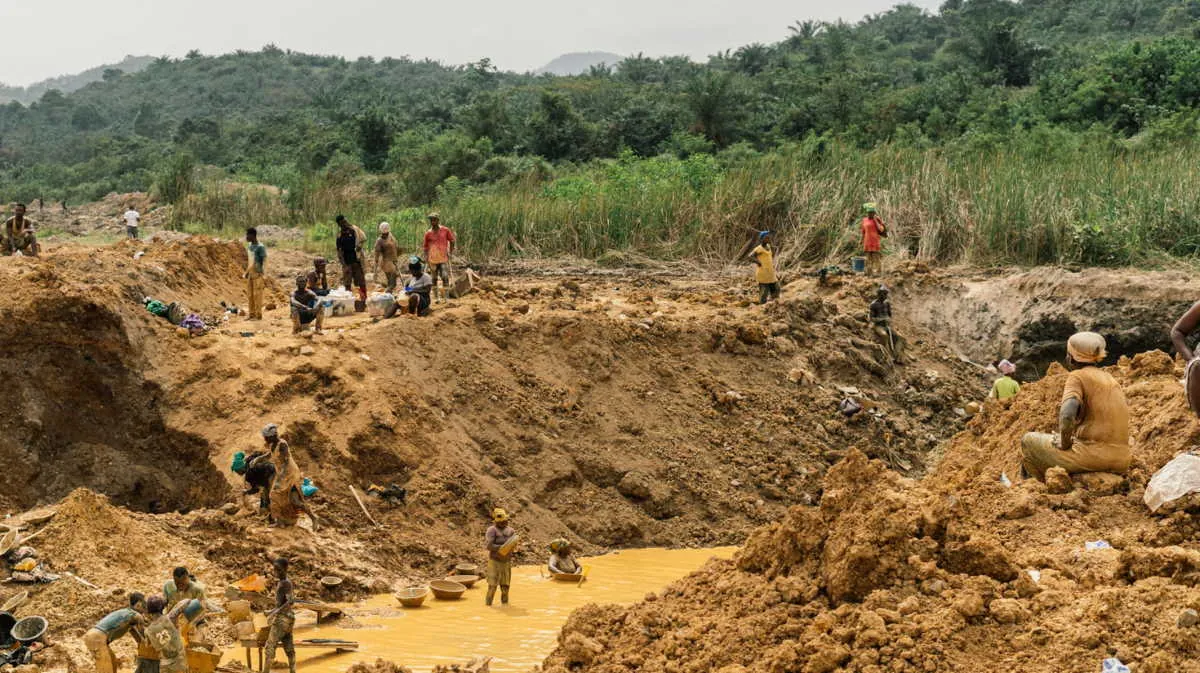
In Ghana’s artisanal gold-mining belt, we sequence the work deliberately: filters for heavy metals first (community-made filters, developed with our partner Nyankonton Aid Foundation, to reduce mercury, lead, cadmium, and arsenic in the water people drink), then education and mercury-use intervention so the contamination stops being generated at all. Our Baguio work focuses on the mining-chemistry change described in our companion brief. Ghana’s abundant local limestone also makes pH adjustment a natural first tool there.
Sources & notes
- Mechanisms, costs, and removal figures: Clean Water Help field assessments, summarized in the detoxifying-communities solution table, cross-checked with US EPA and peer-reviewed ASGM remediation literature.
- Field examples: Ghana mining-belt program and Baguio remediation work.
- Figures are approximate and vary with the AMD profile, flow, scale, and local prices. Captured metals require safe disposal.
Common questions
What is acid mine drainage?
Sulfide minerals in mine waste react with air and water to form sulfuric acid (pH 2.5–4), which dissolves lead, cadmium, arsenic, copper, and manganese straight into the watershed. Acidity makes every metal more soluble, so raising pH is usually the first move.
Why start with pH adjustment?
Acidic water keeps metals dissolved; limestone or dolomite raises pH and many metals precipitate out on their own. It’s cheap, passive, locally sourceable, and it makes every downstream step work better.
What removes arsenic specifically?
Ferric chloride coagulation is a proven, widely used option; it costs under $0.05 per liter to run in very small systems and under $0.01 per liter at industrial scale. Activated alumina excels at near-neutral pH; ion exchange handles low or varied concentrations. The choice depends on the arsenic profile and operating capacity.
Related
Source control beats downstream cleanup by 5 to 20 times.
Heavy-metal remediation is long-term, high-return work. Our Ghana work has district government and partner approval and is ready to start, beginning with a community filter built from 100% locally sourced materials. Our Baguio pilot has a validated proposal, with equipment and partners ready once the chemicals are purchased.