Working prototype online. Looking for pilot partners.
Status as of September 28, 2026
The Philippines Drinking Water Explorer is live as a working prototype. It can follow a live storm, replay past typhoons and earthquakes, and match areas losing treated water with nearby stations that are likely still producing it. The next step is to test it with the people who would use it: refilling-station owners and local disaster offices, starting with interviews and a tabletop exercise, then a pilot with one local government.
- Disaster-needs prototypeMar–May 2026
- Refilling-station modelJul 2026
- Interviews & tabletop testOct–Dec 2026
- Pilot with a local government2027
- Mar 2026Work begins with the Global Centre on Disaster Risk and Poverty on anticipating disaster needs before storms land.
- Apr 2026First prototype online: a typhoon risk map for water, food, shelter and power.
- May 2026We decide the app will be free and open source. A University of the Philippines public health expert agrees to advise.
- Jun 2026Our Philippines team decides to work with universities and local responders to verify the model.
- Jul 2026The app is rebuilt around one question: where is treated drinking water likely to run out, and where is the nearest working supply?
- Sep 2026Plan set: interviews with station owners and disaster offices, and a tabletop exercise.
- 2027Pilot with one local government before storm season.
Inside the app
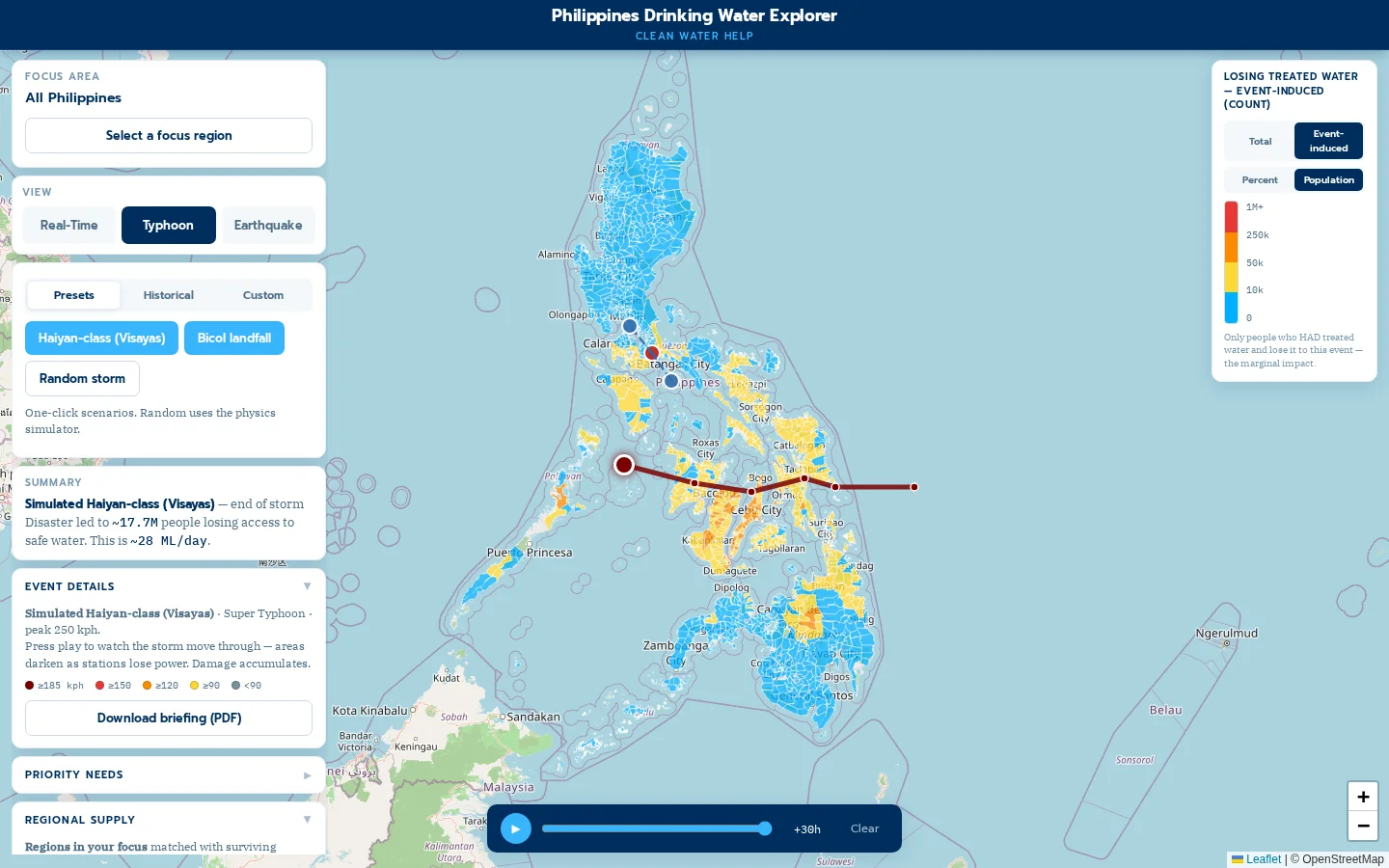
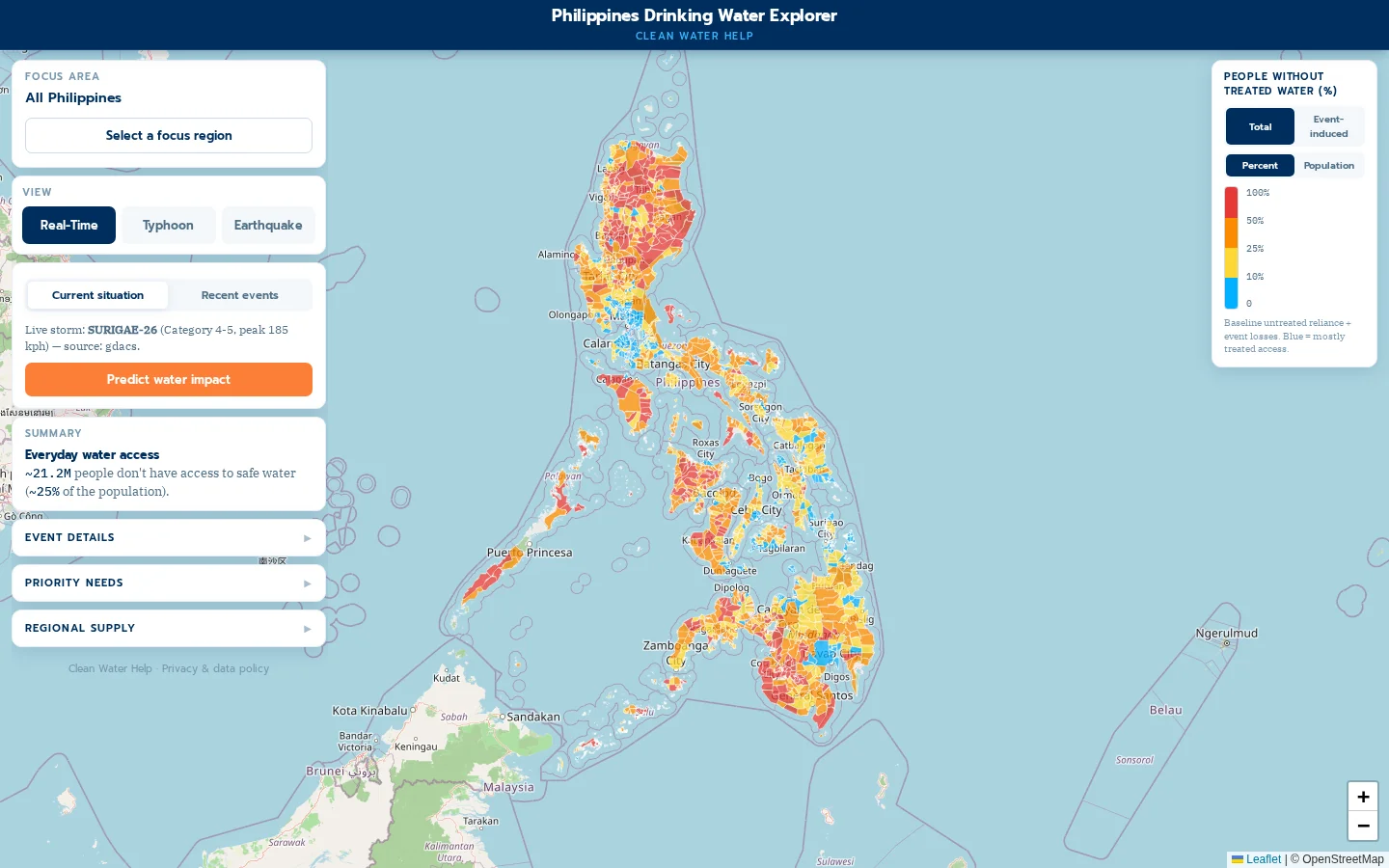
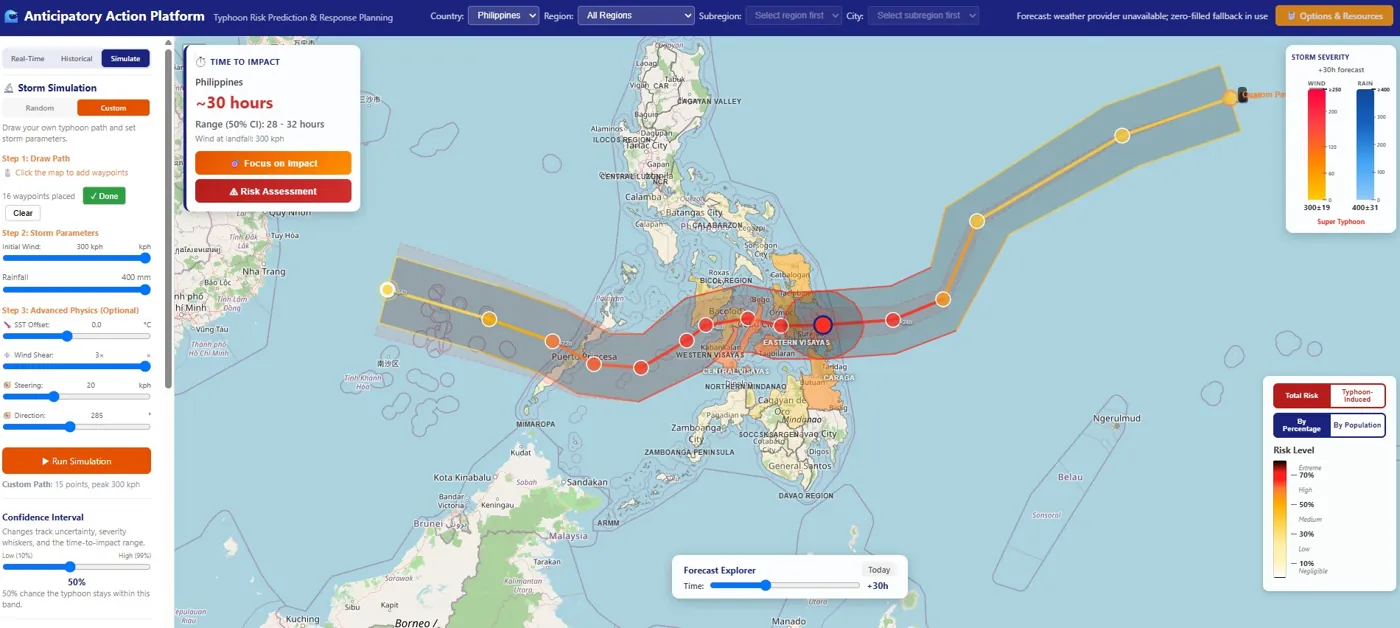
Screenshots from the live prototype at philippines-typhoon-draft.web.app. Model outputs are estimates and are not yet calibrated.
Learn more
The short version is above. Open any section for the details, or download the full report below. For how communities keep drinking water safe before and after a disaster, read our guide to clean drinking water.
The problemRefilling stations go dark when the power and water go out
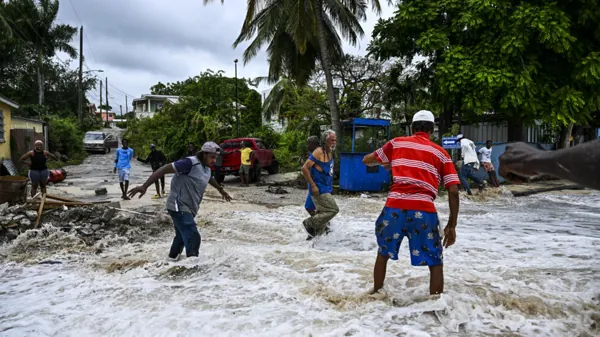
According to the 2020 Census, 46.2% of Philippine households get their drinking water mainly from water refilling stations, small shops that purify water and sell it by the jug. After a typhoon or earthquake, many stations stop working for days to weeks: they lose electricity, the municipal water they treat, or the building itself.
Relief water trucked in from far away often arrives late, after the first days when families need it most. Meanwhile, stations outside the damaged area are often still running and could produce much more.
How the app worksEstimate the gap, then find the nearest supply
- Hazard: follows live storm tracks, or replays historical typhoons and earthquakes, or lets users draw their own scenario
- Impact: estimates which areas lose power, utility water or buildings, and how many people lose treated drinking water
- Supply: matches each area losing water with nearby areas likely still producing it, within 100 to 500 km
- Briefing: produces a one-page PDF for decision-makers
Every estimate is shown as a range, and every supply match is labeled “candidate, verify by phone.”
Why it builds resilienceLocal businesses keep the water flowing
Stations that are still working can run at higher capacity and sell more water, and emergency response agencies can buy that water nearby and deliver it to the people who need it. That is faster than trucking water across the country, and it keeps money in local communities.
Limits and what we still need to proveA prototype, not yet a forecast
The model’s numbers are uncalibrated estimates. It has not yet been used during a real storm, and several assumptions (how long stations stay down, how much extra they can produce) need checking against real events and conversations with station owners. We will not present its outputs as predictions until it has been tested with a local partner.
We also protect privacy: the app does not collect station owners’ contact details, and any future data collection will follow the Philippines Data Privacy Act.
Who we are looking forPartners in the Philippines
- Local disaster risk reduction offices willing to try the app in a tabletop exercise
- Refilling-station owners and associations who can tell us what really happens after a storm
- Universities and research groups to help validate the model
- Humanitarian organizations that deliver water after disasters
Project ReportPhilippines: Drinking Water After DisastersDownload the full project report
The problem the app solves, how it works, its limits, how it will be tested and what partners we need. Updated September 2026.
The team behind it
Volunteer scientists and engineers donating their expertise to this project. Click anyone to see their work.