The pilot unit is delivered. A new local nonprofit is forming.
Status as of September 28, 2026
The pilot unit was delivered in September, and a plumber is being arranged to install it. It will then be tested through the rainy season, when the creek water is muddiest. If the pilot works, four more systems follow, one for each community down the mountain. At the same time, we are funding the formation of PNG Safe Water, a new PNG-based nonprofit led by Philip Wayaki Bongi with a PNG-majority board. It is filing to incorporate.
- Community pipeline2024–2025
- Filter pilot at the tapNow
- Four more systemsAfter the pilot
- Extend + new pipeline2027
- 2024Philip Wayaki Bongi and his community build a gravity pipeline from a mountain creek to their village.
- Dec 2024–May 2025An extension funded through writer Elan Head’s appeal brings the total to more than 3,500 people.
- Jan–Feb 2026Philip meets Clean Water Help and joins our volunteer team.
- Jun 2026Our technical team chooses gravity-powered ultrafiltration at each tap stand for the pilot.
- Jul 2026Plan agreed for an independent, locally led PNG nonprofit.
- Sep 3, 2026PNG Safe Water holds its first board meeting.
- Sep 2026The prefilter and ultrafiltration pilot unit is delivered; a plumber is being arranged to install it.
- NextInstall and test the pilot; file PNG Safe Water’s incorporation (target January 2027).
What your gift does
About $5,000: filtration at the tap stands on the existing line, which serves 3,500+ people.
About $5,000: extend the line to about 1,500 more people.
About $15,000: a new pipeline for about 3,500 more people, including a mountain school.
About $25,000 in all (estimate), for safe water for about 8,500 people.
From the field
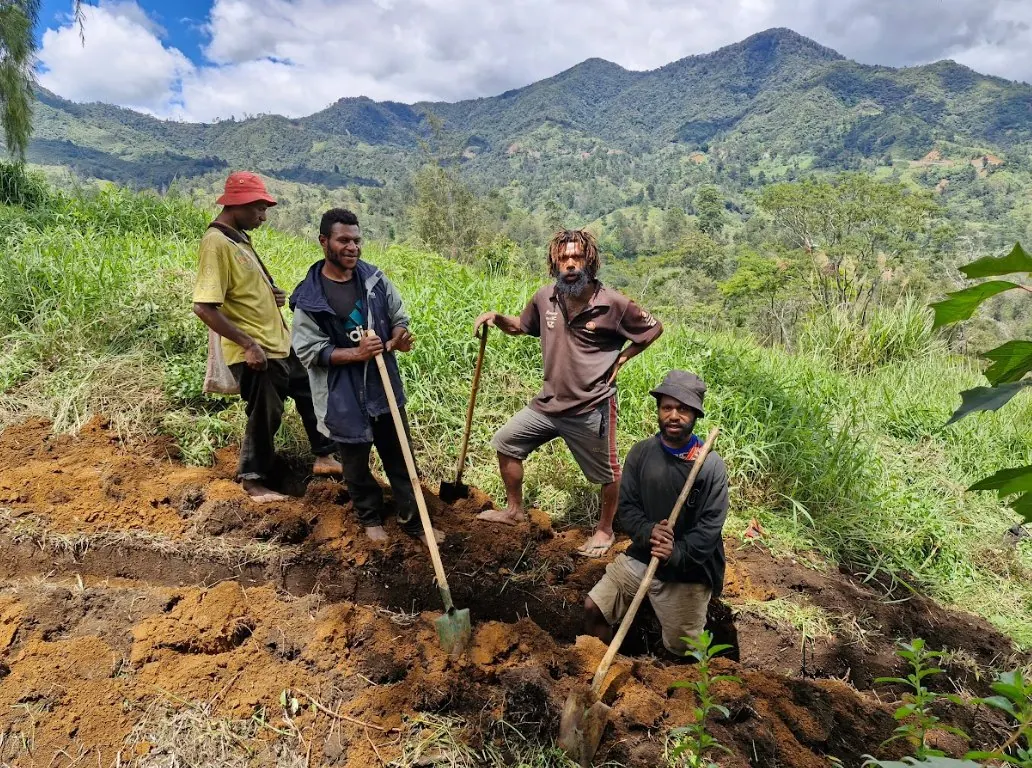
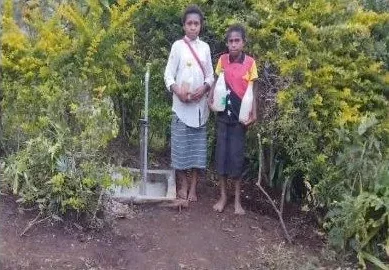
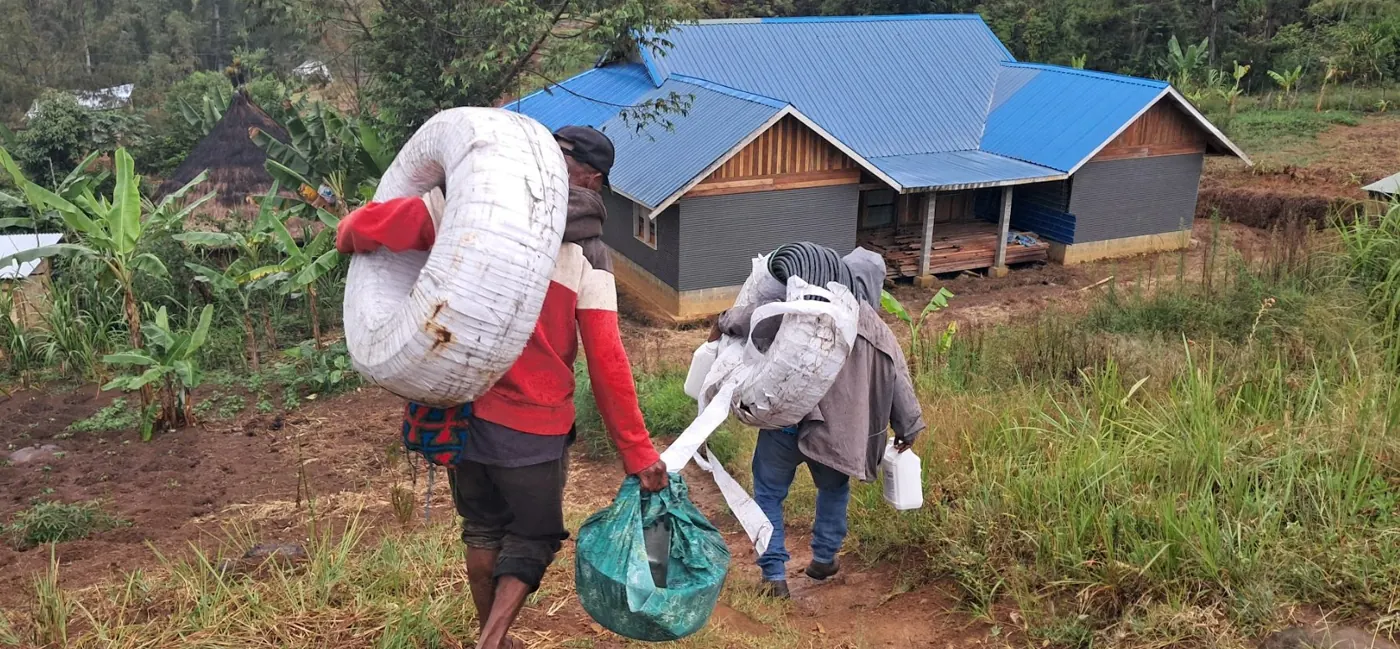
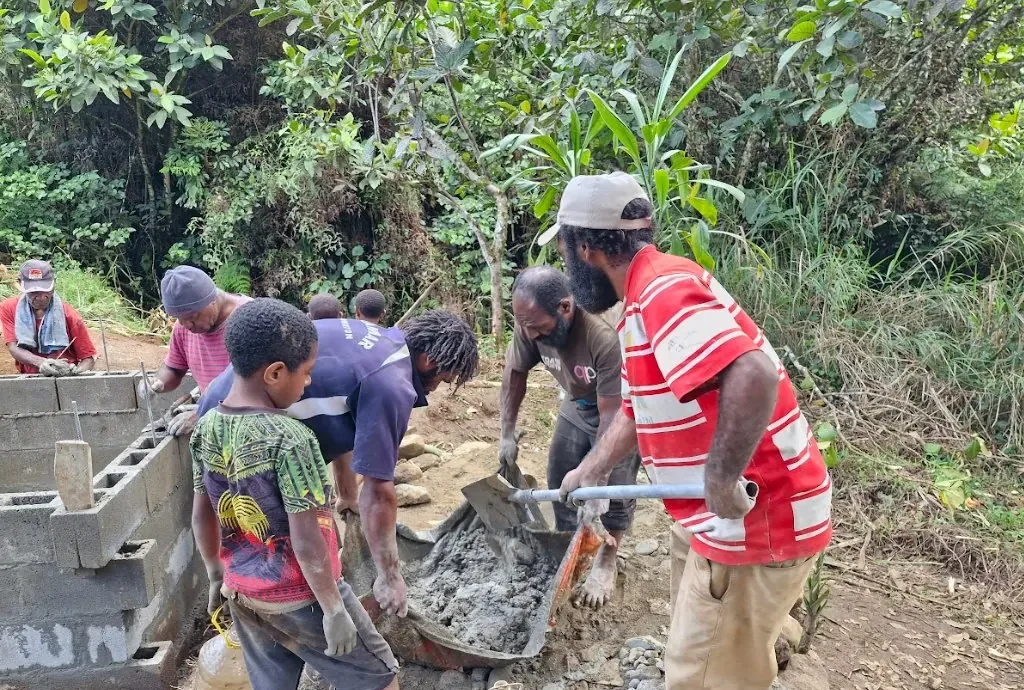
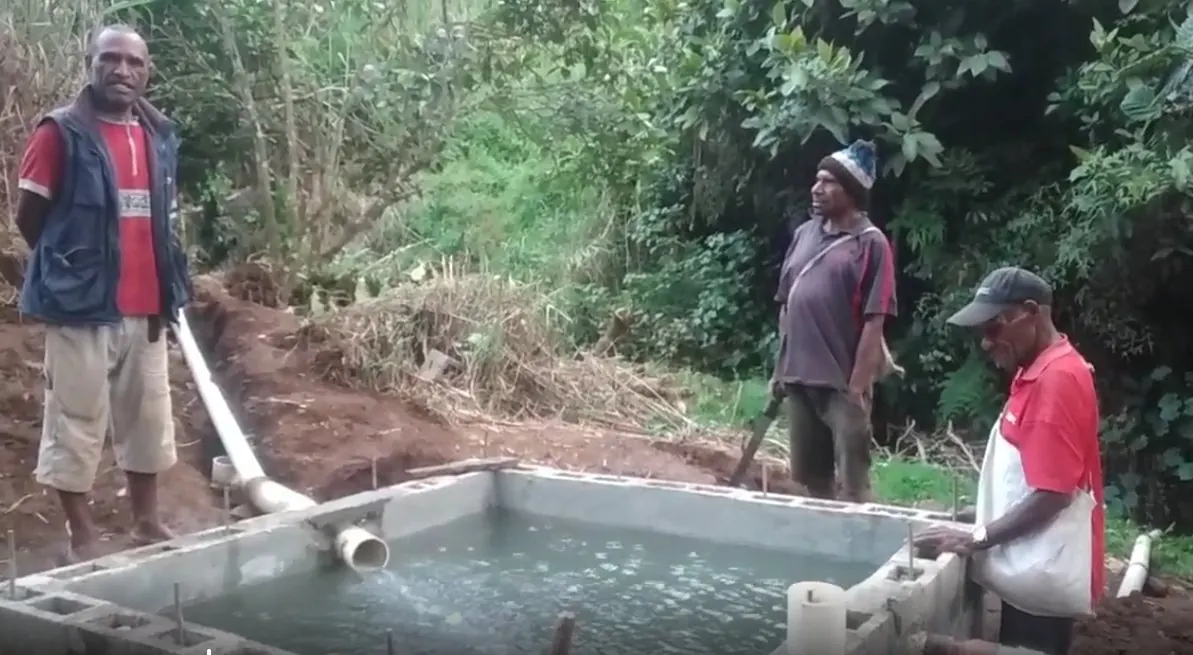
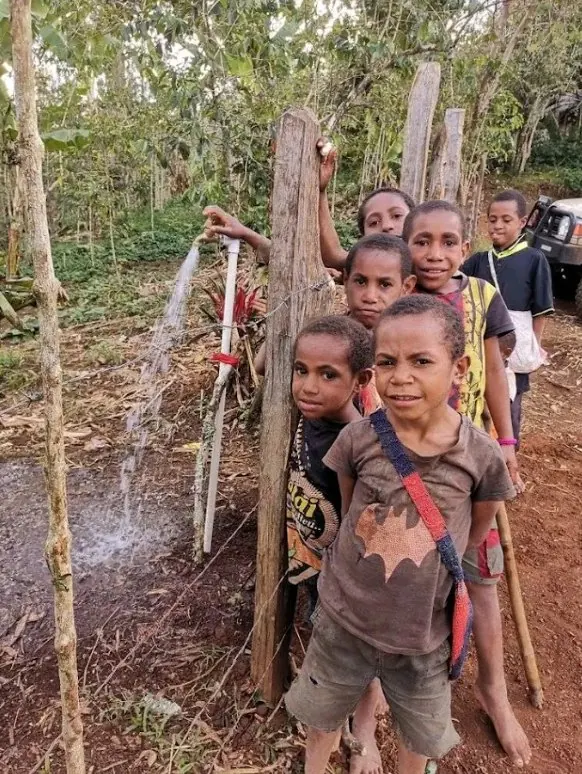
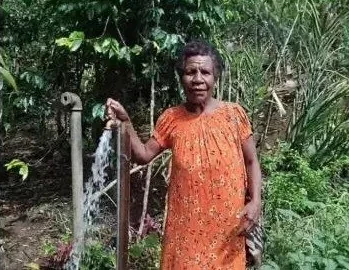
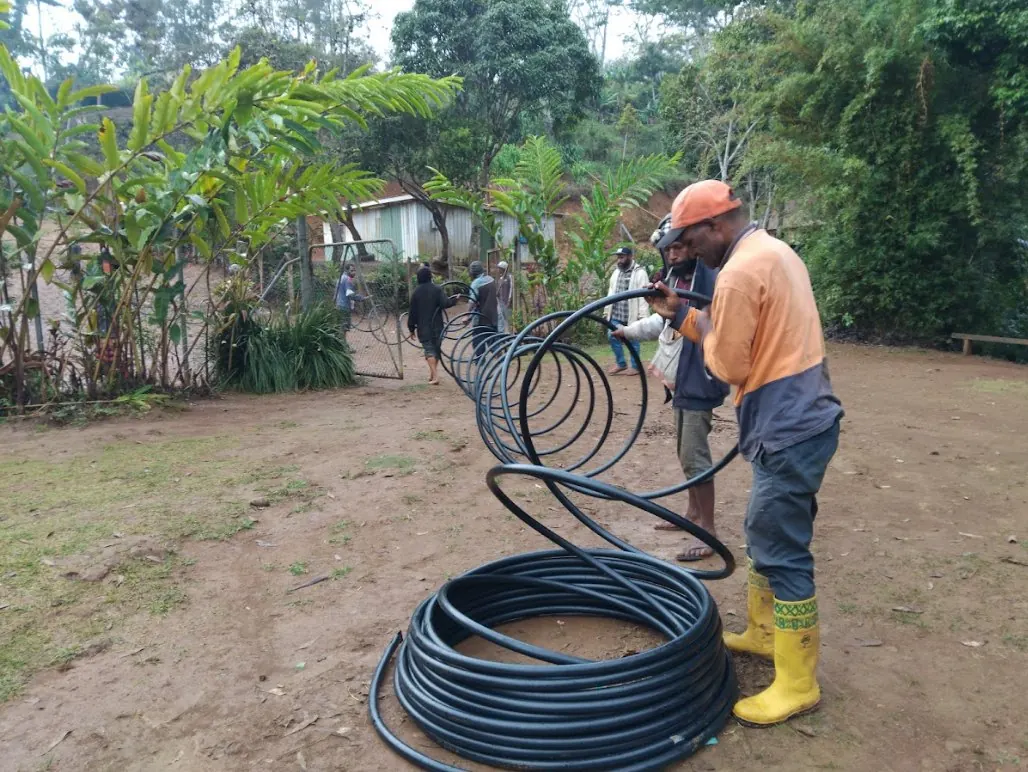
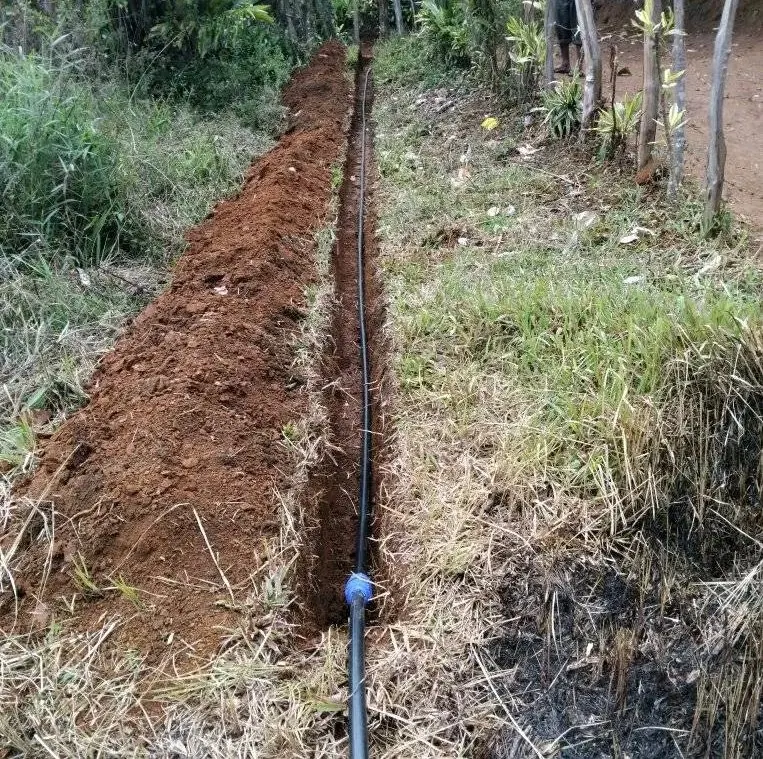
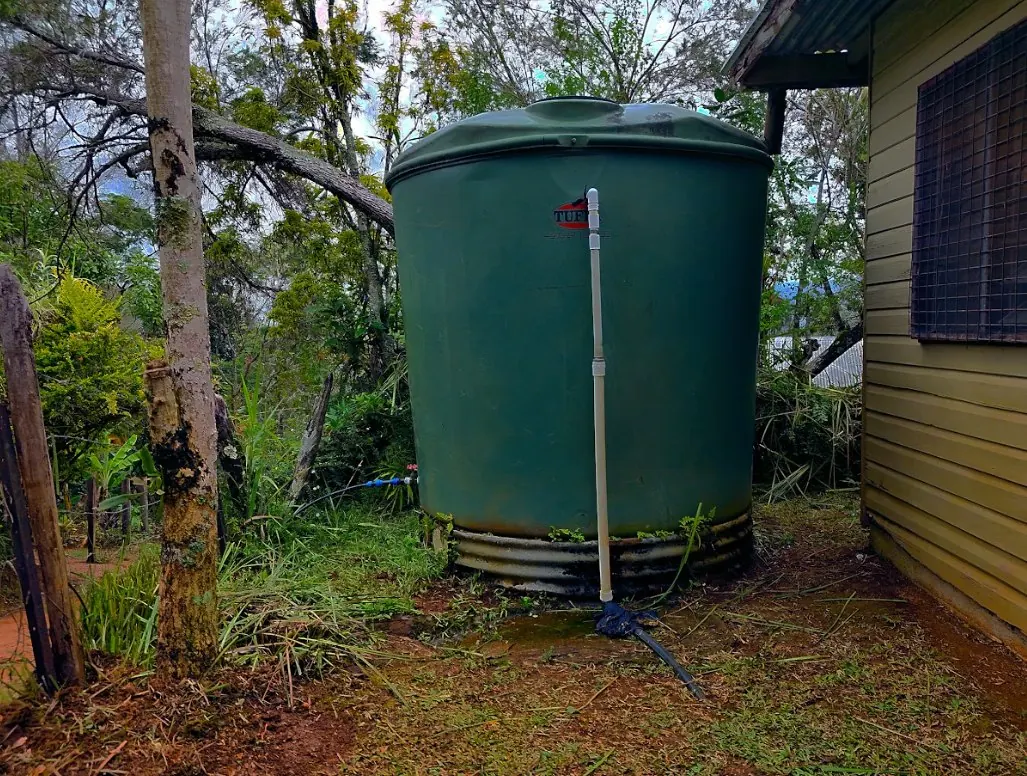
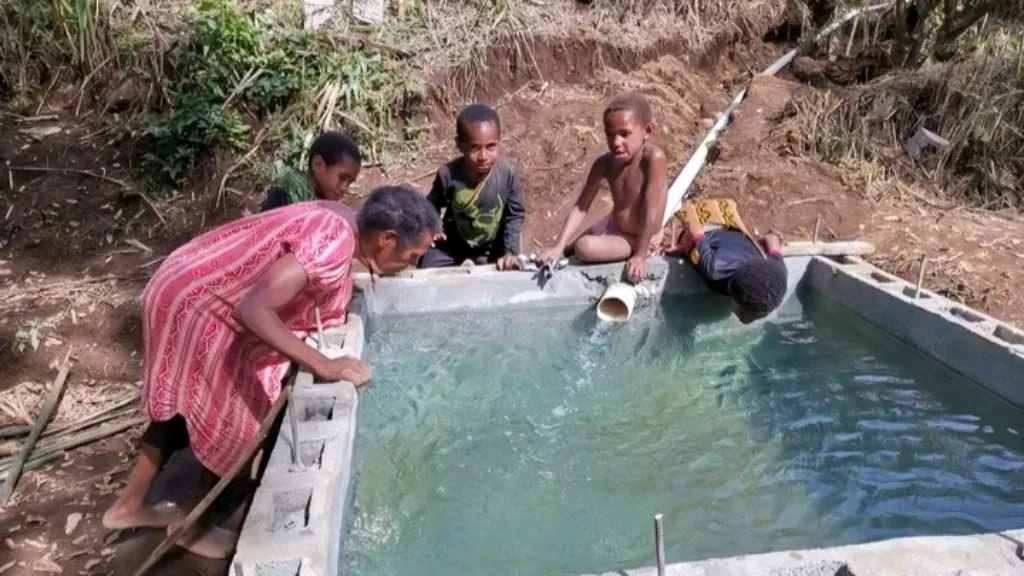
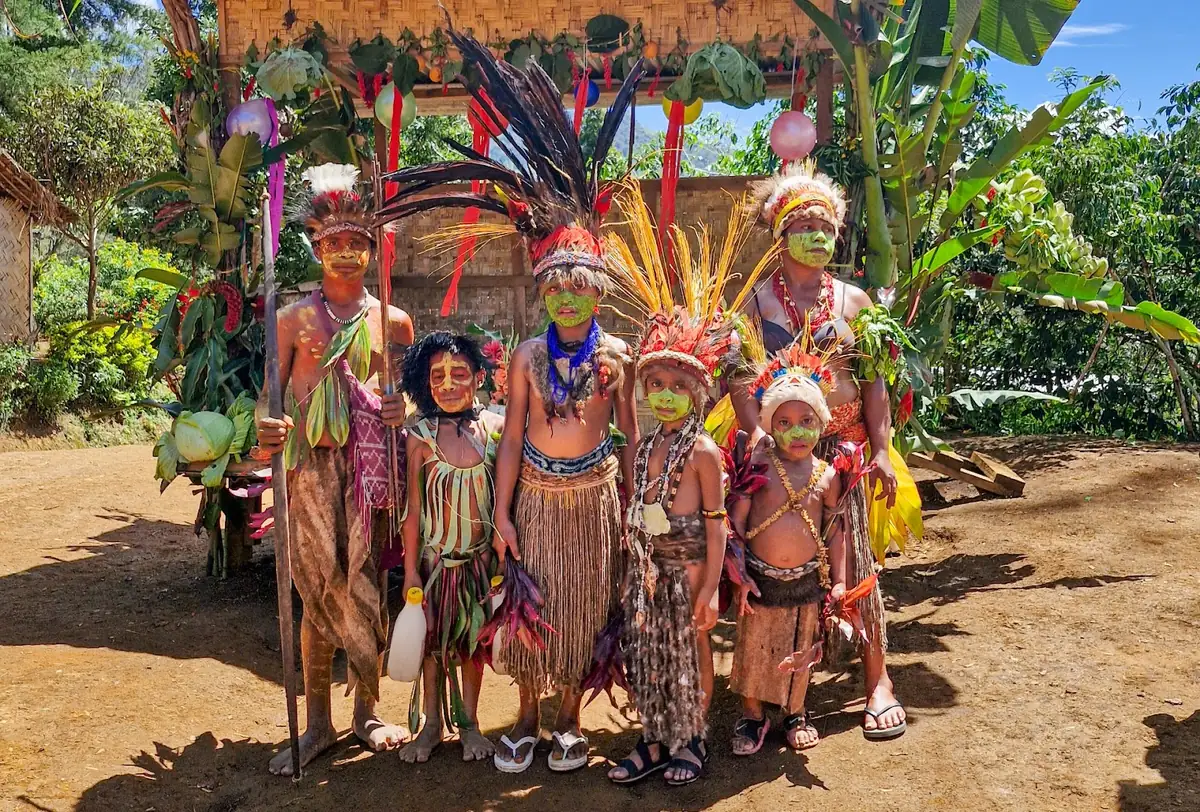
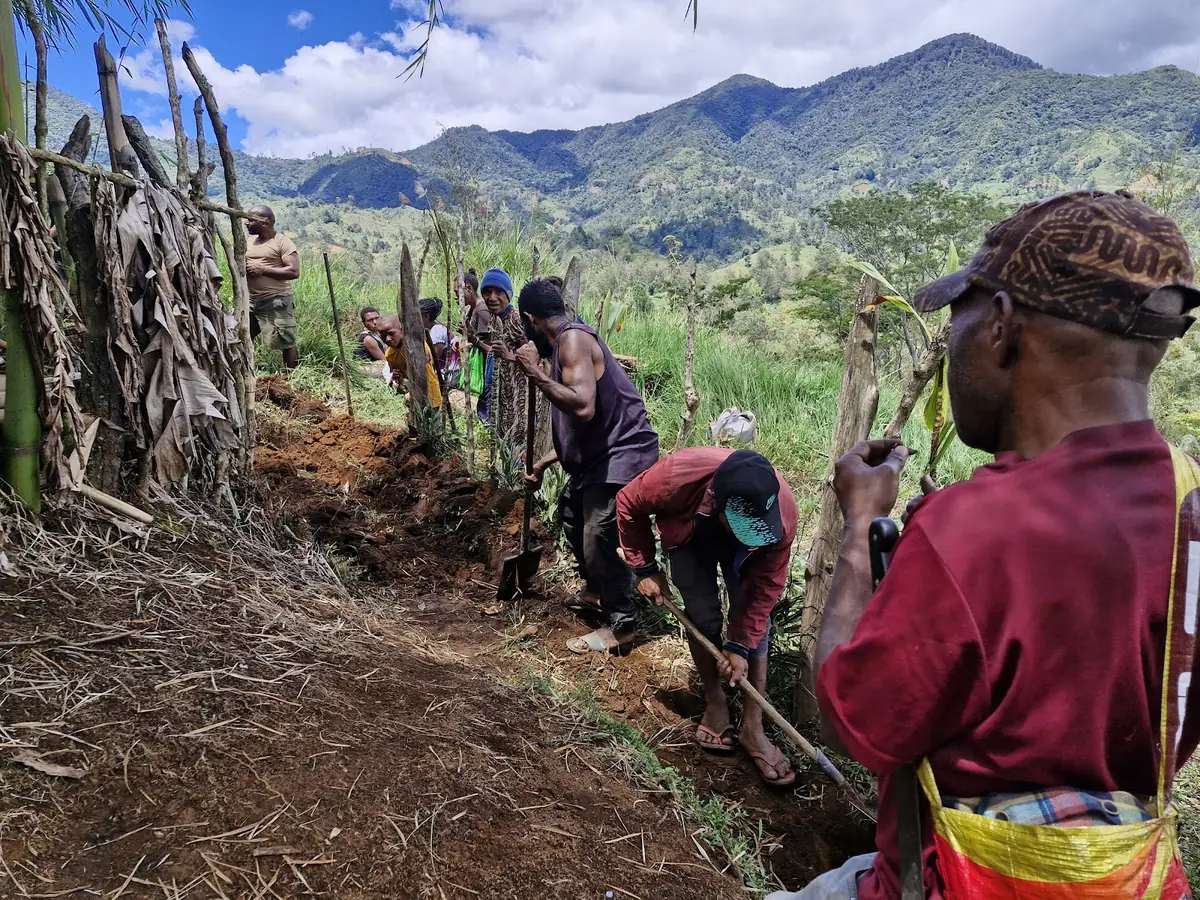
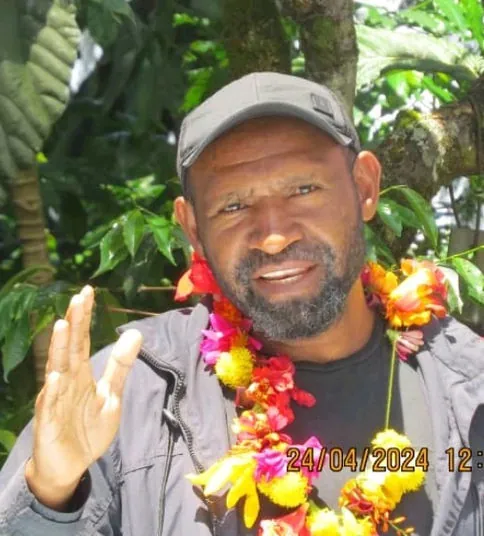
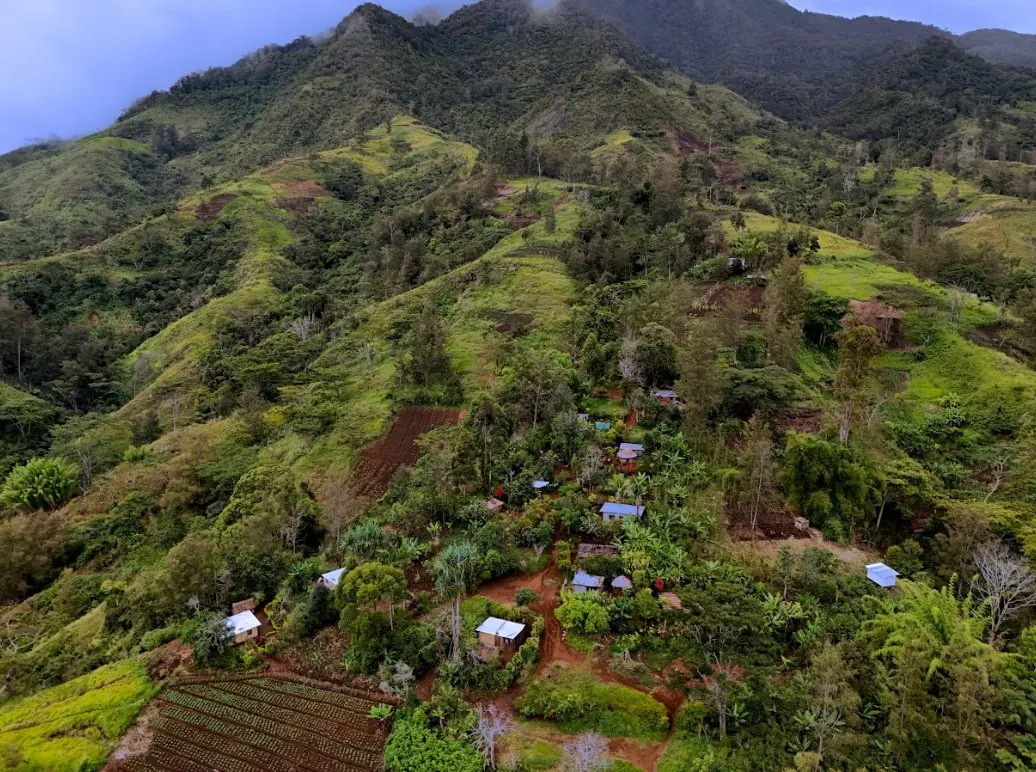
Photos: Philip Wayaki Bongi and the community. Shared with permission.
Learn more
The short version is above. Open any section for the details, or download the full report below. For the science behind this system, read our brief on ultrafiltration and combined treatment.
The challengeMiles of walking for water that was not safe
Before the pipeline, families in these mountain villages walked miles every day to collect water that was not safe to drink, and relatives were dying of typhoid. The area had a piped supply in the 1980s, but it rusted out long ago.
The community pipeline solved the distance problem. The next step is upgrading to multi-barrier filtration at the taps: a dependable way to remove disease-causing germs that works without electricity and without daily trips to a tank far up the mountain.
The pipeline the community builtDug by hand, built in under six months
Philip Wayaki Bongi grew up here, went to university on donated tuition, and set out to fix his village’s water. In 2024 he and his community, with support from a US water charity, built a catchment on a mountain creek, a storage tank and a gravity pipeline down to tap stands in the village. Villagers hand-dug kilometers of trench and carried every bag of cement and length of pipe up the mountain. The first system cost about $15,000.
Carey Lafferty knew Philip from her years with a health charity in PNG. Her daughter, writer Elan Head, told the story and raised the money for an extension completed in 2025, bringing the total to more than 3,500 people. Households pay about K20 (about $4) into a repair fund.
Why a filter at the tap standsGravity does the work: no power, no chemicals
Each filter unit sits at a tap stand and uses the pressure the mountain already provides. Water passes through a 40 micron stainless screen, then a 5 micron cartridge, then an ultrafiltration membrane with pores of about 0.01 micron, fine enough to remove bacteria (including those behind cholera and typhoid) and protozoa. A pressure-reducing valve protects the unit, and gauges show when a filter needs cleaning.
- One unit per tap stand means one failure does not cut off 3,500 people
- Each village looks after its own unit, with a trained maintenance leader
- About $100 to $120 in parts per unit, plus shipping
The main risk is sediment: after heavy rain the creek runs muddy, which can clog filters. The pilot will tell us how often cleaning is needed in the rainy season.
Options we ruled outIn-line chlorine and UV did not fit this site
In-line chlorine dosing was ruled out because the dosing devices available are not proven at this flow, and the simpler venturi type needs more flow than the pipeline provides. UV light was ruled out because it needs electricity (there is no grid, and solar panels at remote tanks risk theft) and the same fine prefilter as ultrafiltration.
Our fallback if the filters clog too often: teach point-of-collection chlorination, where families treat collected water themselves. It is less ideal, because it depends on daily effort and long-term use typically settles around 40 to 50% of households, but it is far better than nothing.
PNG Safe WaterLocal ownership from the start
PNG Safe Water is a new nonprofit led by Philip Wayaki Bongi as Executive Director, with a PNG-majority board. It held its first board meeting on September 3, 2026 and is filing under PNG’s Associations Incorporation Act, with a target of January 2027.
Clean Water Help is paying the start-up costs and will manage the water projects until PNG Safe Water is operating, funded and self-governing. Then we step back to the role we play with PALPER in DR Congo and KCCO in Cambodia: technical and project-management advisor, with local people holding the final say.
What’s nextPilot, four more systems, then more villages
- Install and test the pilot at a tap stand; record pressure, cloudiness, bacteria and cleaning needs
- If it works, install four more systems, one for each community down the mountain, then extend the line and build a second pipeline for about 5,000 more people (costs under What your gift does, above)
- Over a 10-year life the full plan costs about $0.30 per person per year, an estimated cost per life saved of about $450 (how we estimate it)
- Five scholarships in 2027 for students from the Eastern Highlands, $1,500 per student per year. Philip is gathering applications for the December 2026 to January 2027 window (see our Scholarships page).
All costs are estimates. Filtration and construction costs vary and depend on things we don’t know yet, such as the final pipe route, the terrain and shipping.
 Project ReportPapua New Guinea: Safe Water from the Mountain
Download the full project report
The story of the community pipeline, the filter-at-the-tap design and the options we ruled out, costs, the PNG Safe Water plan and a dated timeline. Updated September 2026.
The team behind it
Volunteer scientists and engineers donating their expertise to this project. Click anyone to see their work.