
Filter by Filter: Safe Water Comes to DR Congo (Goma)
In a city living through decades of war, unsafe water spreads cholera and typhoid. This is the story of a local team, a simple shared filter, and the Goma neighborhoods where families now drink safe water.
City points are simplified for readability.
This story begins in central Africa
The Democratic Republic of the Congo is home to more than 100 million people and to some of the largest freshwater reserves on the continent. Yet in Goma, safe water close to home is scarce.
Eastern DR Congo has lived with decades of conflict
In North Kivu province, years of armed conflict have driven many families from their homes. Many return to find wells and pipes destroyed, so they drink from lakes, rivers and puddles.
Goma, a city on the shore of Lake Kivu
Goma has grown with families fleeing the fighting. Here, cholera and typhoid are constant risks. Both spread through unsafe drinking water, and both are preventable.
Five neighborhoods, one pilot
In Katoyi, Kasika, Kiziba, Mabanga, and Kilijiwe, five neighborhoods of Goma's Karisimbi commune, PALPER began a small filter pilot in June 2026.
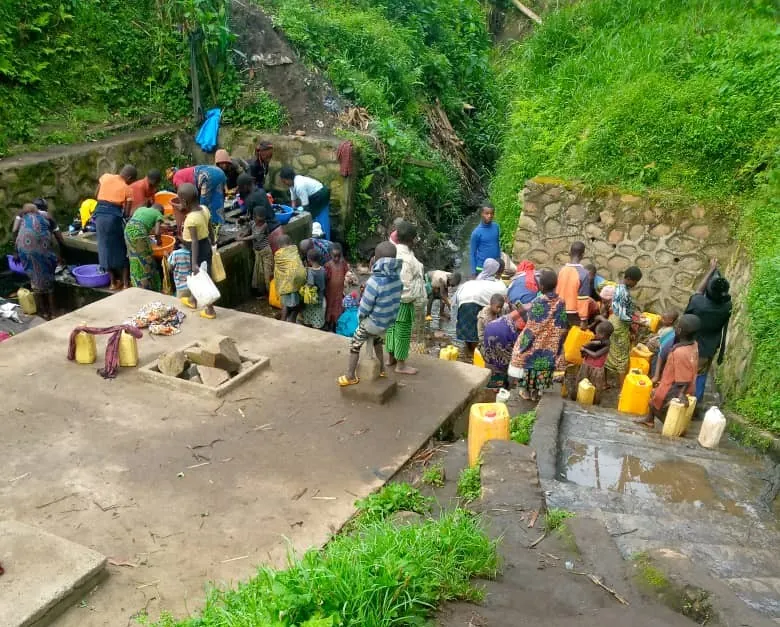
Unsafe water, and a dangerous walk to get it
Cholera, typhoid, and amoebic dysentery all travel invisibly in the water families have no choice but to drink.
Collecting water is work that falls on women and children, and the long walk to a source can pass through areas where assault is a real risk. In Goma, distance to water is a safety problem as much as a health problem.
We estimate that giving about 1,500 people safe water prevents about one death a year. In Goma, where conflict, hunger and other illness raise the risk, it likely takes fewer than 1,500 people. At $80 per shared filter, that is an estimated cost of about $1,000 per life saved (how we estimate it).
Go deeper: what makes the water deadlytechnical
The main threats here are fecal pathogens (germs from human waste): Vibrio cholerae (cholera), Salmonella typhi (typhoid), and the amoebas behind dysentery. They enter lakes and shallow wells wherever sanitation has collapsed, which is exactly what conflict does to a region.
During project planning, PALPER surveyed water access in the Rwanguba health zone. Of 174 water sources identified, only 11 were developed and working. The rest were undeveloped, broken, or unsafe (partner-reported figures).
Boiling requires charcoal families cannot afford. Bottled water costs more than many families earn. Goma sits on volcanic rock, so drilling wells is not practical. That is why the project starts with filtration: it removes the pathogens without daily fuel or chemical purchases.
The hero of this story lives in Goma
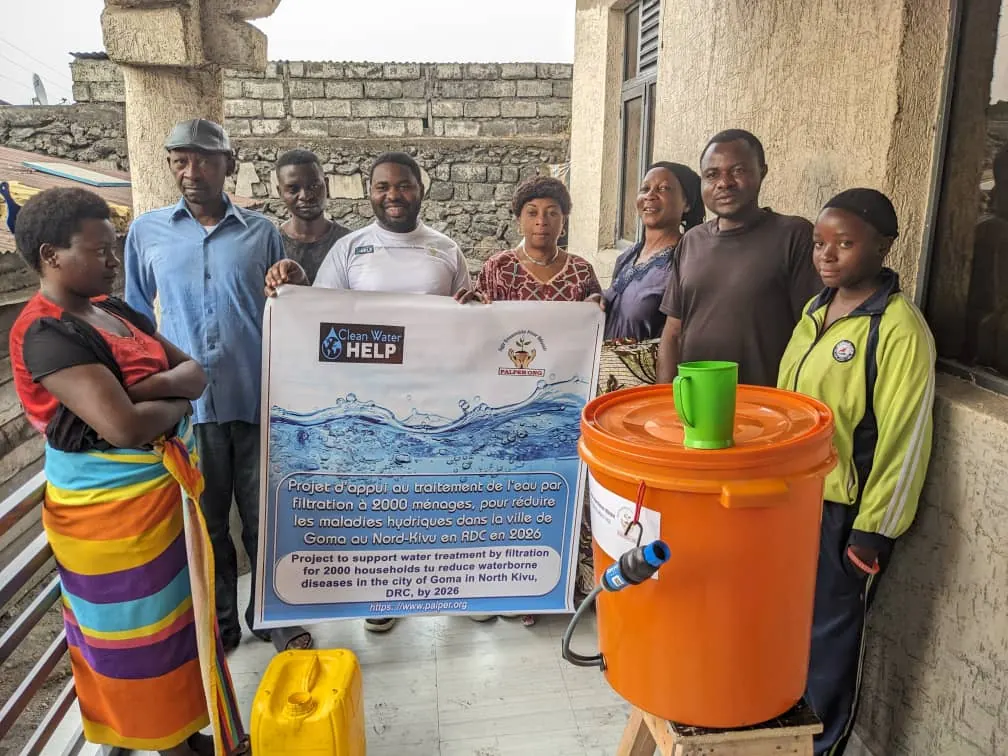
PALPER is a Congolese nonprofit led by Martin Mashagiro, working in the very neighborhoods it serves.
PALPER's full name translates as the Support Program for the Fight against Poverty. It has more than 45 full-time staff across four provinces. Its team knows the communities, the terrain, and the politics, and it operates everything on the ground: awareness campaigns, household selection, filter installation, and training in the local language.
In September 2025, Martin wrote to Clean Water Help asking to partner. The first video call dropped on a bad connection, so the two teams switched to WhatsApp messages and never stopped talking. In June 2026 our board made DR Congo one of its four focus countries.
“I am so thankful to be a part of your mission to help the people of Goma. Your kindness and passion are contagious. It is such an honor to work with you, and you inspire me to be a better person.”
Byran Fuhrmann, Clean Water Help founder, to Martin MashagiroPALPER leads in the field. Clean Water Help, a team of more than 45 volunteers, about 25 of them with PhDs, supplies the science, the designs and the funding. We also built and host PALPER's website, palper.org, so more people can see their work.
Meet PALPER, the local heroes in DRCMeet the Clean Water Help team
A plan simple enough to survive a war zone
One gravity filter. Five households. Twenty-five people. No electricity, no chemicals, and nothing that needs regular resupply.
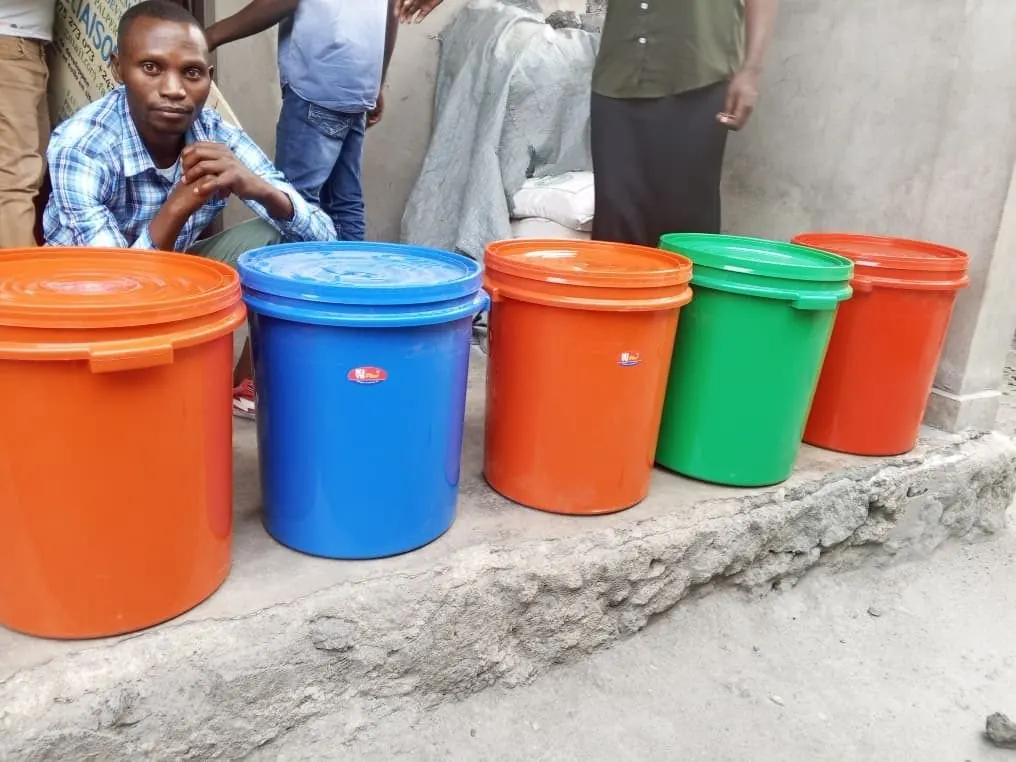
The filter is a $50 membrane cartridge mounted on a bucket. Water pours in the top, gravity pushes it through millions of microscopic pores, and pathogens are left behind. A periodic backwash keeps it flowing for years. Delivered and installed in Goma, with bucket, stand, transport, and PALPER's training, one filter costs about $80.
Sharing each filter among five chosen households spreads the benefit, builds shared ownership, and keeps each unit easy to monitor.
Go deeper: why we chose this filtertechnical
Our volunteer engineers compared two candidate technologies before the pilot:
- Gravity hollow-fiber membranes (chosen): no power, no moving parts, long life, cleaned by backwashing. Removes cholera and typhoid bacteria at 0.1 micron.
- Hand-pump ultrafiltration: higher flow, but it needs pumping and spare parts. Four units were ordered for comparison; they were held at the Kinshasa airport and never arrived.
Field decisions followed the same logic. Buckets of 20 to 25 liters beat big drums because drums invite theft and are hard to carry over volcanic rock. Household chlorine was set aside for now because of the risk of overdosing, an unreliable supply, and the taste.
Go deeper: how the money moves in a conflict zonetransparency
Banking is suspended across North and South Kivu, so funds travel by mobile money transfer, the system Congolese businesses themselves rely on. PALPER has been screened against US sanctions lists.
PALPER photographs a receipt for every purchase, down to the buckets, and files them in its activity reports. It also photographs each installation and tracks every filter on paper forms: who uses it, how often it is backwashed and any reported illness.
May 2026: the filters reach Goma
Ten filters arrived by truck from Kenya on May 18. Our volunteers sent use instructions in French and English that week, and PALPER began installing the filters in June.
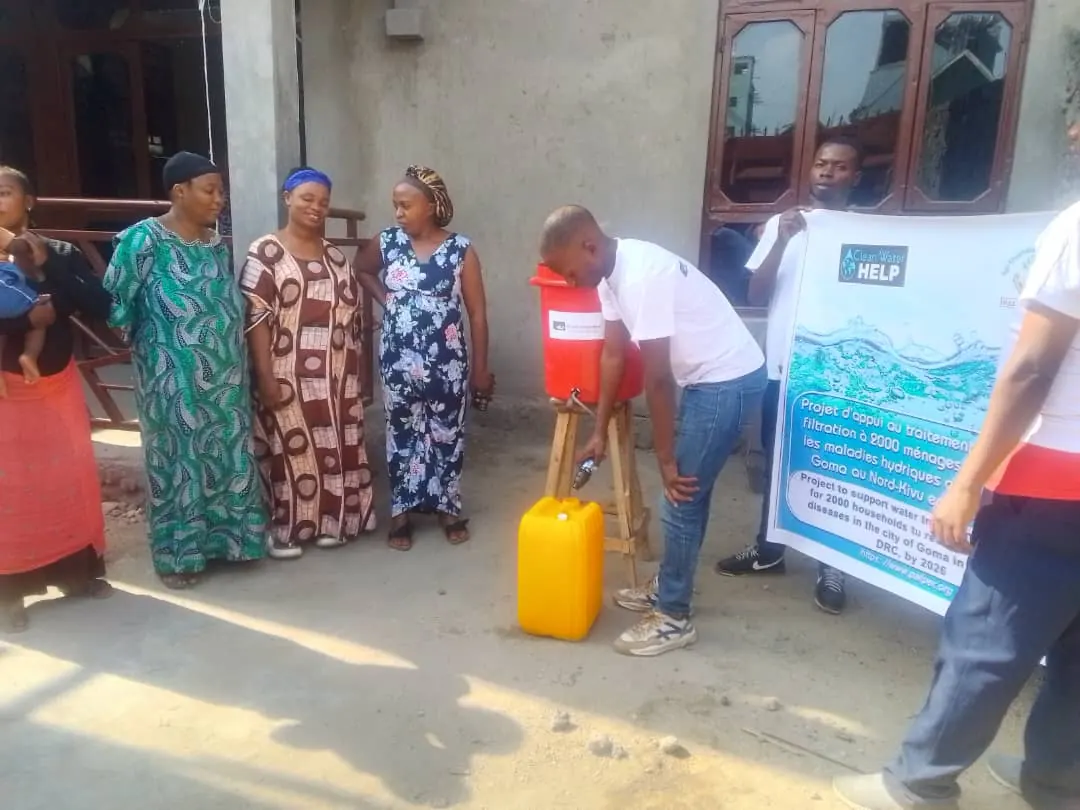
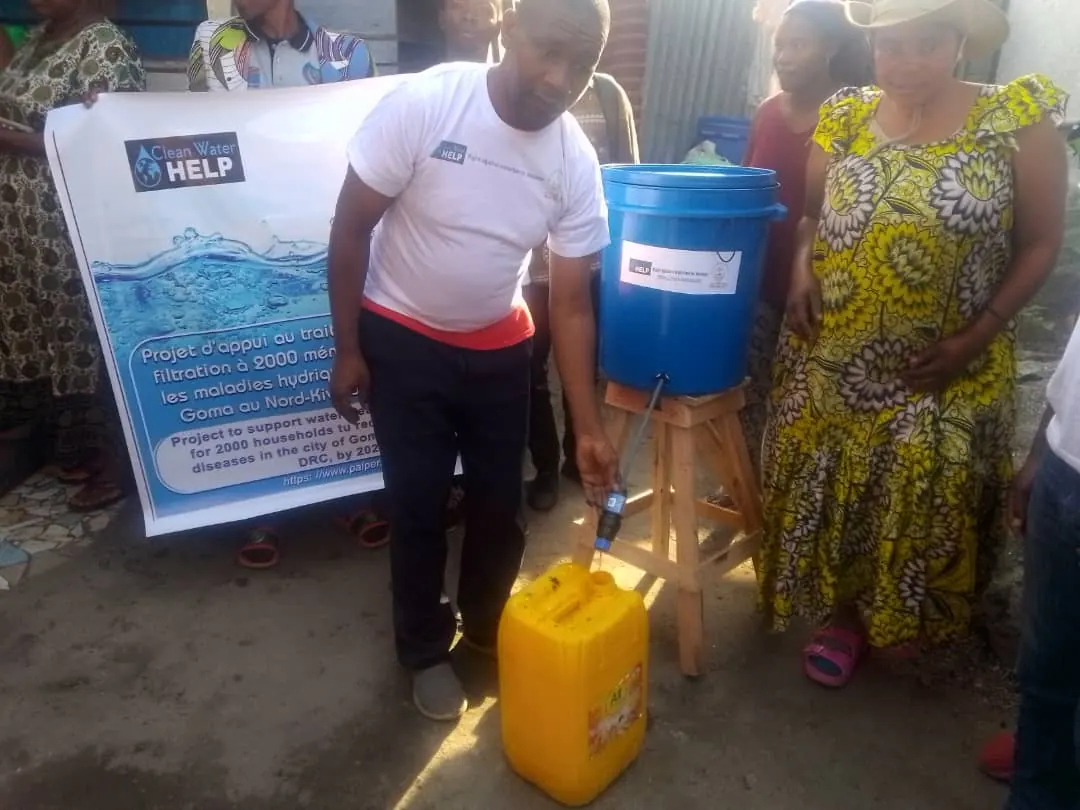
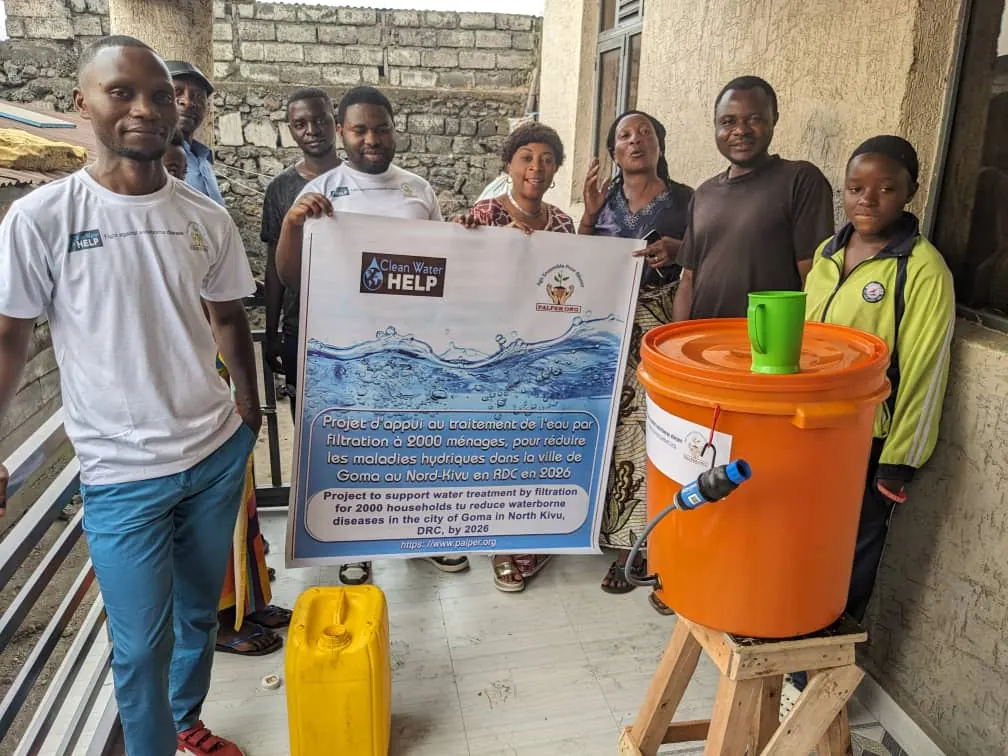
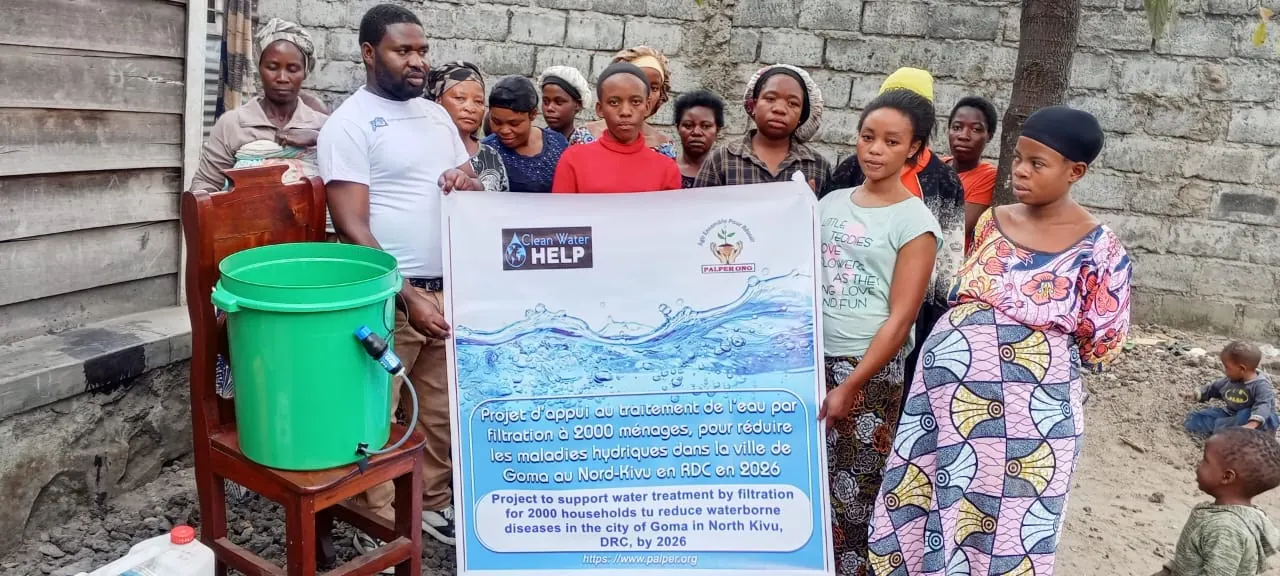
Street by street
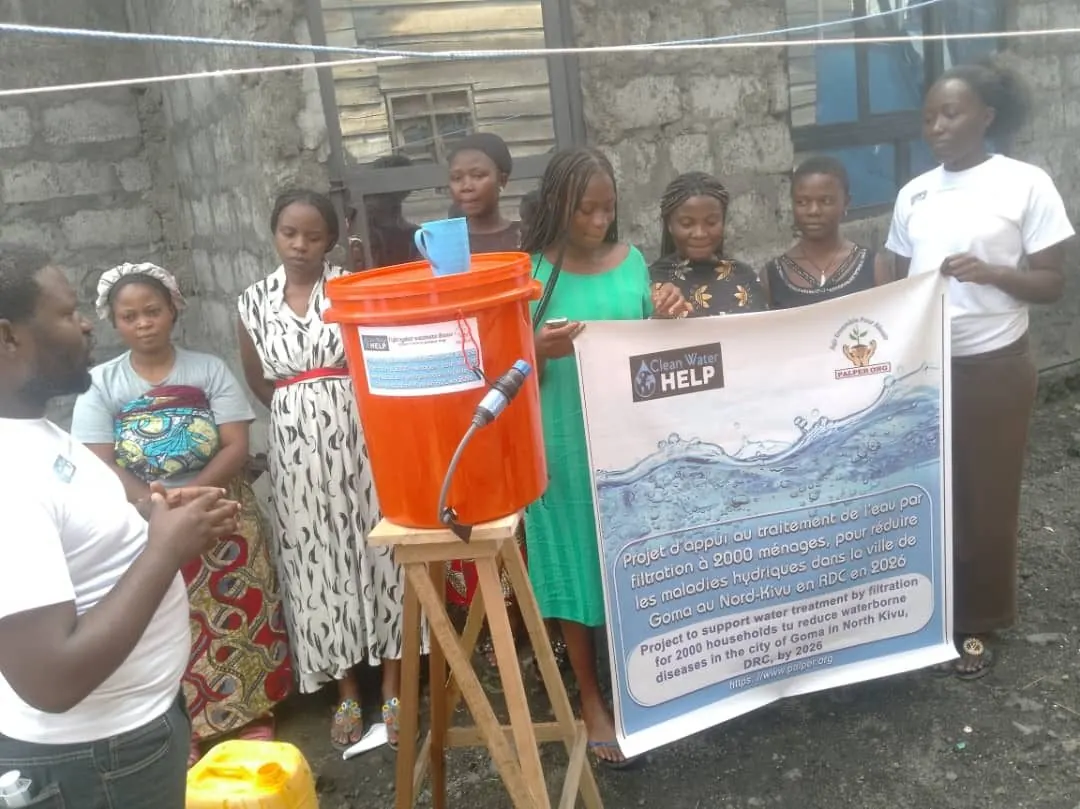
PALPER's team walked the five neighborhoods running awareness sessions on waterborne disease, then selected five households to share each filter, favoring the most vulnerable families first.
The first clean water flows
Each installation ends the same way: untreated water goes in the top, and filtered water runs from the tap into a family's jerrycan. Training covers use, cleaning, and the backwash that keeps the membrane working for years.
Five households per filter
Twenty-five households received shared filters in the first round.
Round one: about 125 people
The first five filters served about 125 people, and PALPER filed a receipt for every purchase. The other five filters went out in August.
Round two: about 250 people
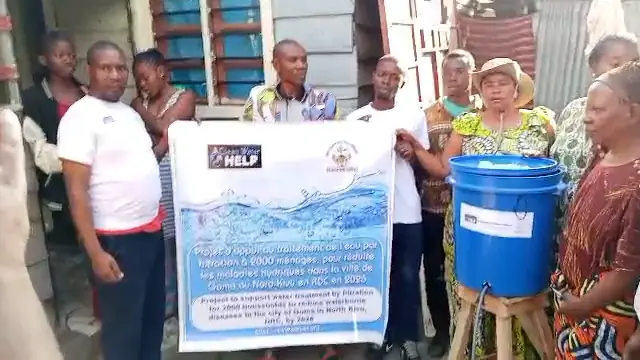
By mid-August all ten filters were in use. Fifty households, about 250 people, now share them.
Not everything worked
Four hand-pump filters we bought from China for comparison never arrived. They were held at the airport in Kinshasa, far from Goma, during war and an Ebola outbreak. Since then we buy inside Africa and send filters to Goma by truck. Mid-project, PALPER's Facebook page was wrongly disabled, cutting a communication line to the community. We are still working to restore it.
The largest problem is demand. In PALPER's words, the entire population wants a filter at home. Ten filters in a city the size of Goma is only a beginning.
Then a letter arrived
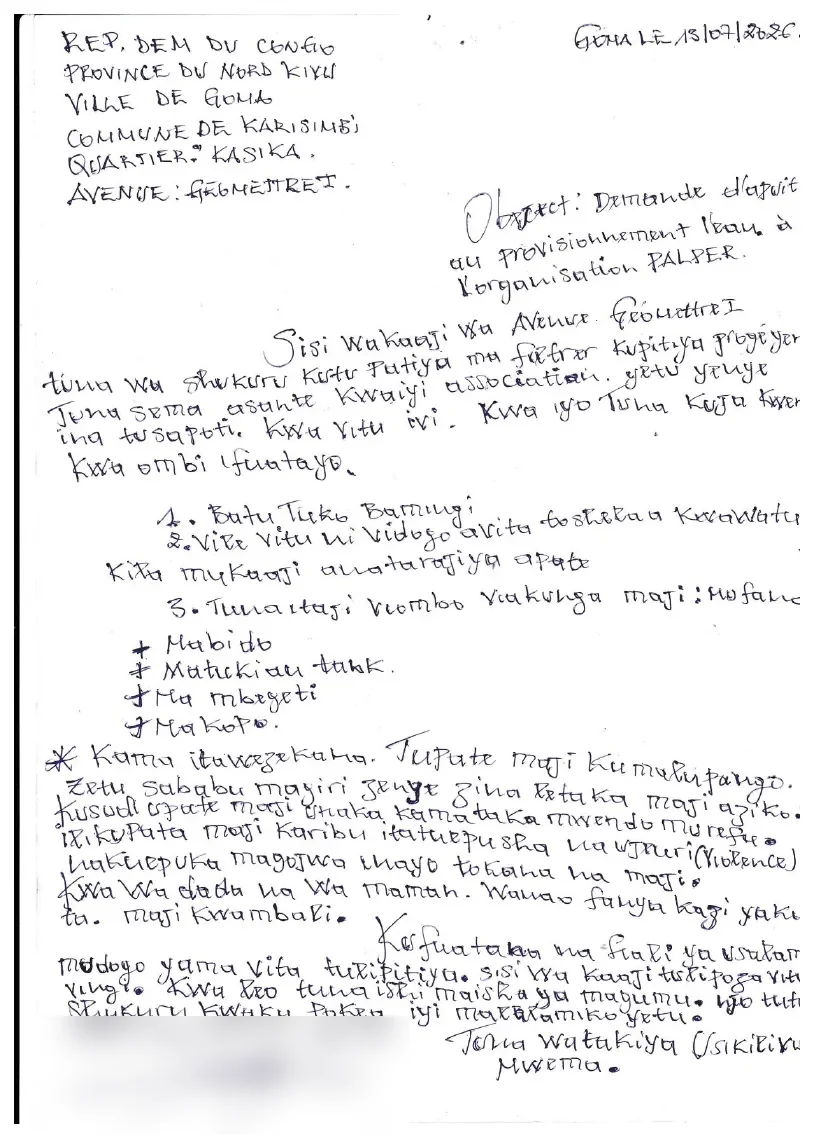
On July 13, 2026, the residents of Avenue Géomètre I in Kasika sent PALPER a handwritten letter. Abridged translation from Swahili:
Signed by the avenue chief on behalf of the residents of Avenue Géomètre I, Kasika, Goma.
“The community in North Kivu Province has welcomed these water filters with great joy, as they enable them to treat the water essential for their survival and health.”
Martin Mashagiro, PALPER president, July 2026How your gift answers the letter
Slide to see what a gift becomes in Goma.
Based on about $80 to deliver and install one filter, shared by five households of about five people.
The $20,000 goal covers 200 filters ($16,000), then a used truck, a pump and a collapsible tank so PALPER can deliver lake water to families.
Where this road leads
Families reported less stomach illness and asked for more filters. In September we ordered 50 more filters, bringing the total to 60 filters and about 1,500 people.
This season: filters 11 to 20 are paid for and on a truck from Kenya. The other four shipments of ten follow, each paid for when it arrives.
Next: reach about 5,000 people by the end of 2027, a step toward PALPER's long-term goal of 2,000 households in Goma. Donations and grants written in PALPER's name fund each step.
Later: bring source water closer to families, the need the Kasika letter named. After the filter rollout, the plan is a used truck, a pump and a collapsible tank so PALPER can collect lake water in bulk and deliver it to families to filter. Any plan must not undercut local water sellers.
The risks remain: active conflict, closed banks, fragile shipping routes, and epidemics that stretch every clinic. That is why the designs stay simple and the ownership stays local.
- September 2025First contact. PALPER asks to partner. After a dropped video call, the teams keep talking on WhatsApp.
- December 2025Kickoff. Volunteers form funding, operations and technical teams for the project.
- May 18, 2026Arrival. Ten filters reach Goma by truck from Kenya.
- July 2026Round one. Five filters, 25 households, about 125 people.
- July 13, 2026The letter. Kasika residents write asking for more.
- August 2026Round two. All ten filters in use: 50 households, about 250 people.
- September 2026Fifty more. Our board approves 50 filters; filters 11 to 20 are on their way.
- NextFilters 21 to 60 in shipments of ten (about 1,500 people by early 2027), then about 5,000 people by the end of 2027.
The people of Kasika told us what they need. Help us deliver it.
Their letter asks for filters, storage, and water close to home. Three ways to help:
Give
$80 delivers a filter that serves five households. 100% of your gift reaches the field. Our founders pay every operating cost.
Fund This Project → Give $80 via PayPalVolunteer
Engineers, scientists, French speakers, grant writers: this project runs on donated expertise, and we need yours.
Volunteer With UsShare
Send Goma's story to someone who should read it.
Clean Water Help is a US 501(c)(3) nonprofit, EIN 99-0765687. Field activities in this story are drawn from PALPER's July and August 2026 activity reports and project records.
Papua New Guinea: the community that dug its own water pipeline by hand →