Investing in the future of clean water
For $1,500 a year, a sponsorship lets one student from a water-poor community study science or engineering full time instead of working to feed their family. It is the highest-leverage long-term water investment we make: hardware solves one community’s problem once, but a local engineer solves those problems across a region, for a career.
The problem hardware can’t fix
In the communities we serve, what stops brilliant students is tuition of a few hundred dollars and the simple fact that a family needs their labor today more than a degree years from now.
Without local engineers, scientists, and organizers, water projects stay dependent on outsiders forever. Every filter and treatment system we help install still needs someone nearby who understands it, can fix it, and can design the next one. The durable fix for the water crisis is local expertise, and it is built one student at a time.
The math: $1,500 a year
The barrier is smaller than most people expect. Two costs stand between a capable student and a degree, and both are modest:
The living stipend is the part outsiders miss. Tuition alone doesn’t free a student. If the family still depends on the wages they would have earned, they can’t attend. Replacing that income is what actually lets them focus on school. Over a full degree, the whole investment is about $4,500 to $6,000 (three years for public health, four for civil engineering) to produce a working scientist or engineer.
Figures are drawn from our DR Congo program, where one student’s year costs $1,500 ($500 tuition and registration, $100 books and supplies, and a $900 living stipend). We use the same $1,500 for Papua New Guinea students, planned for 2027. In DR Congo, payments go through our partner PALPER, and 100% of a sponsorship reaches the student. Our founders cover every operating cost.
What a sponsorship actually includes
A sponsorship is more than a tuition check. It is a four-part package designed to produce a graduate who is ready to lead water work at home:
Paid in installments through our partner PALPER, which checks each student’s registration and results with the university before the next payment.
Replaces the wages the student would otherwise earn, so studying full time doesn’t mean their family goes without.
Time with our local water partner, PALPER, on active clean-water projects, starting in 2027.
One-to-one guidance from a volunteer PhD or professional engineer in the student’s own field.
Why it’s the highest-leverage investment we make
We focus on impact per dollar. On our project economics, hardware is already cheap: a gravity membrane filter reaches a family for a few dollars a person. But hardware depreciates, and it solves one community’s problem once.
A sponsored engineer or scientist does something hardware can’t: their impact grows over time. One graduate can design, build, and lead water projects across a whole region for decades, and train the next people who do the same. Science and engineering are also durable, in-demand careers; there is no shortage of work in the field, so the graduate’s own future is secured at the same time their community’s is.
The best clean-water investment we can make is a person who spends their life solving water problems.
This isn’t a theory. It’s why we’re here
Philip Wayaki Bongi, who leads our work in Papua New Guinea, went to university because donors paid his tuition when he was a young adult with no money. That changed his life, led him to a career in monitoring and evaluation, and is why he started a water project for his own community. Our work in Papua New Guinea exists because that cycle already happened once.
That is the cycle a sponsorship starts: a student becomes an expert, the expert becomes a leader, and the leader lifts the next student. It is the opposite of dependency: our role shrinks as theirs grows, as it should.
Clean Water Help in the field
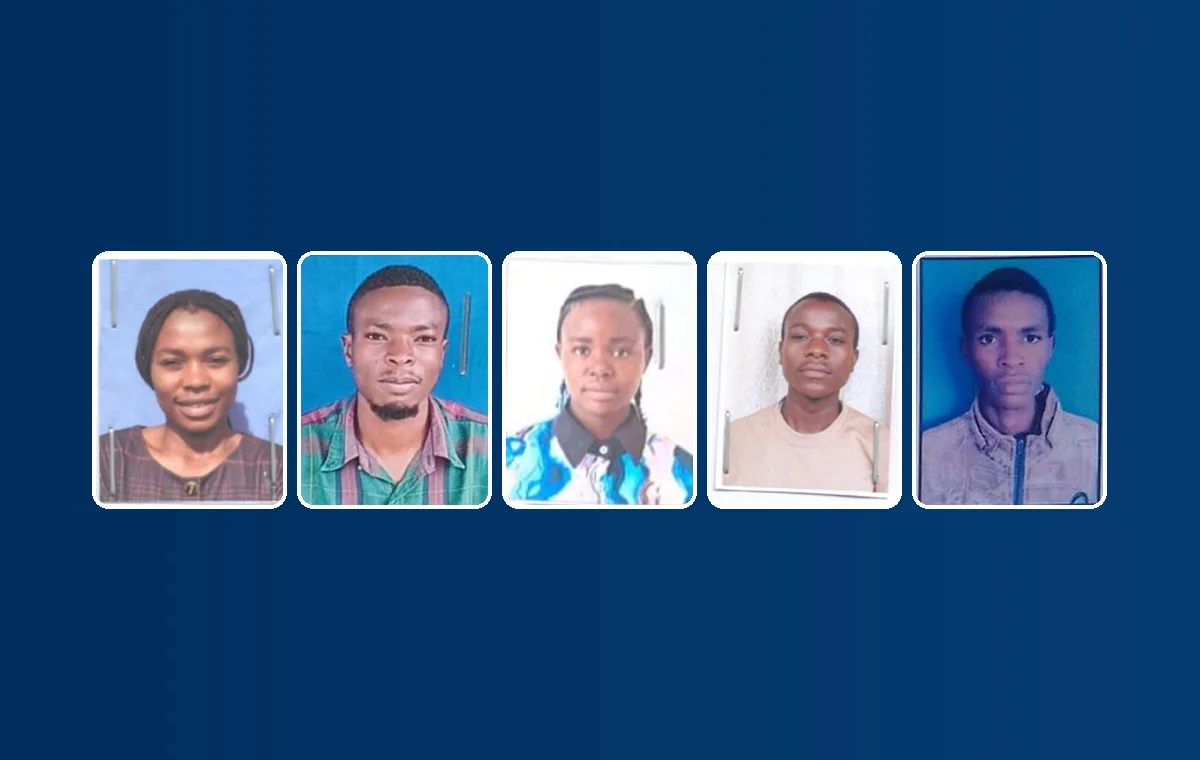
In DR Congo, our partner PALPER collected 33 applications from students in Goma in June 2026, manages payments locally and will host each student’s internship. A panel of our volunteers scored every application, and five students start at ULPGL (Université Libre des Pays des Grands Lacs) in October 2026. Each student will have a volunteer mentor, and sponsors receive a progress update each semester. In Papua New Guinea, Philip Wayaki Bongi is gathering the first applications.
See the program and the team behind it on the Scholarships for DR Congo Students page →
Sources & notes
- Cost figures: Clean Water Help’s DR Congo scholarship budget and ULPGL’s 2026 fee table. Papua New Guinea uses the same $1,500 award. Program details on the Scholarships for DR Congo Students page.
- Partner organizations: PALPER (DR Congo), which collects applications and manages the students locally, and ULPGL (Université Libre des Pays des Grands Lacs), Goma, where the students enroll.
- Comparative project economics for water hardware: Clean Water Help Learning Center: Project Economics.
Common questions
How much does it cost to sponsor a student?
$1,500 per student per year: about $500 covers tuition and registration, and the rest is books and a living stipend that replaces the income they’d otherwise earn, so they can study full time instead of working to provide for their family. A full degree is about $4,500 (three-year public health) to $6,000 (four-year civil engineering).
Can a company sponsor a specific student?
Yes. Corporate sponsors fund a named student’s year and receive a progress update each semester. It is the most personal CSR we offer. Talk to our team to set one up.
Why fund education instead of more filters?
We fund both. But hardware solves one problem once, while a local engineer solves them for a region across a career and trains others. Education is the investment that compounds.
Related
$1,500 funds a year of university.
For companies, a named scholarship is a CSR story your team will remember. 100% of your gift reaches the student.