
Two household filters run on nothing but gravity and stop the diseases that kill children: cholera, typhoid and dysentery. A gravity hollow-fiber membrane is a physical sieve you can carry in a bucket. A biosand filter is a bed of sand with a living biological layer that you build once and use for a decade or more. Neither needs power, and neither is universally the right answer. This brief is about which one fits which community.
Why no-power filtration matters
Most of the communities we serve have no reliable electricity and no supply chain for cartridges, chlorine tablets, or replacement lamps. A filter that needs any of those things fails the moment the consumable runs out. Both filters in this brief avoid that problem: they use gravity as the only driving force and treat water by physically removing pathogens rather than dosing chemicals into it. That’s why they are our two main filters at the household level.
Pathogen size determines what a filter can catch. Protozoa (Giardia, Cryptosporidium) are the largest at 5–15 microns and the easiest to remove. Bacteria (E. coli, Vibrio cholerae, Salmonella typhi) span 1–5 microns. Viruses (rotavirus, norovirus, hepatitis A) are the smallest at 0.02–0.3 microns, and they are the reason neither of these filters is a complete answer everywhere.
Gravity hollow-fiber ultrafiltration
A gravity membrane filter (the Sawyer-type unit is the classic example) is a bundle of hollow fibers riddled with pores about 0.1 microns across. Water pulled through the fiber wall by gravity leaves bacteria and protozoa physically trapped behind; a periodic syringe backflush clears them out and restores flow. No power, no dosing, no consumable chemicals.
The maintenance is a syringe backflush, not a spare part. A single cartridge rated for 100,000+ gallons works out to pennies per person per year, and the whole unit is light enough to carry. That is why it is our default for dispersed, off-grid, or displaced households. Its hard limit is in the spec box: it is a physical sieve, so it will not remove viruses or dissolved chemicals. Where viruses matter, it needs a disinfection step. (See our companion brief, Ultrafiltration and combinations, for when to add one.)
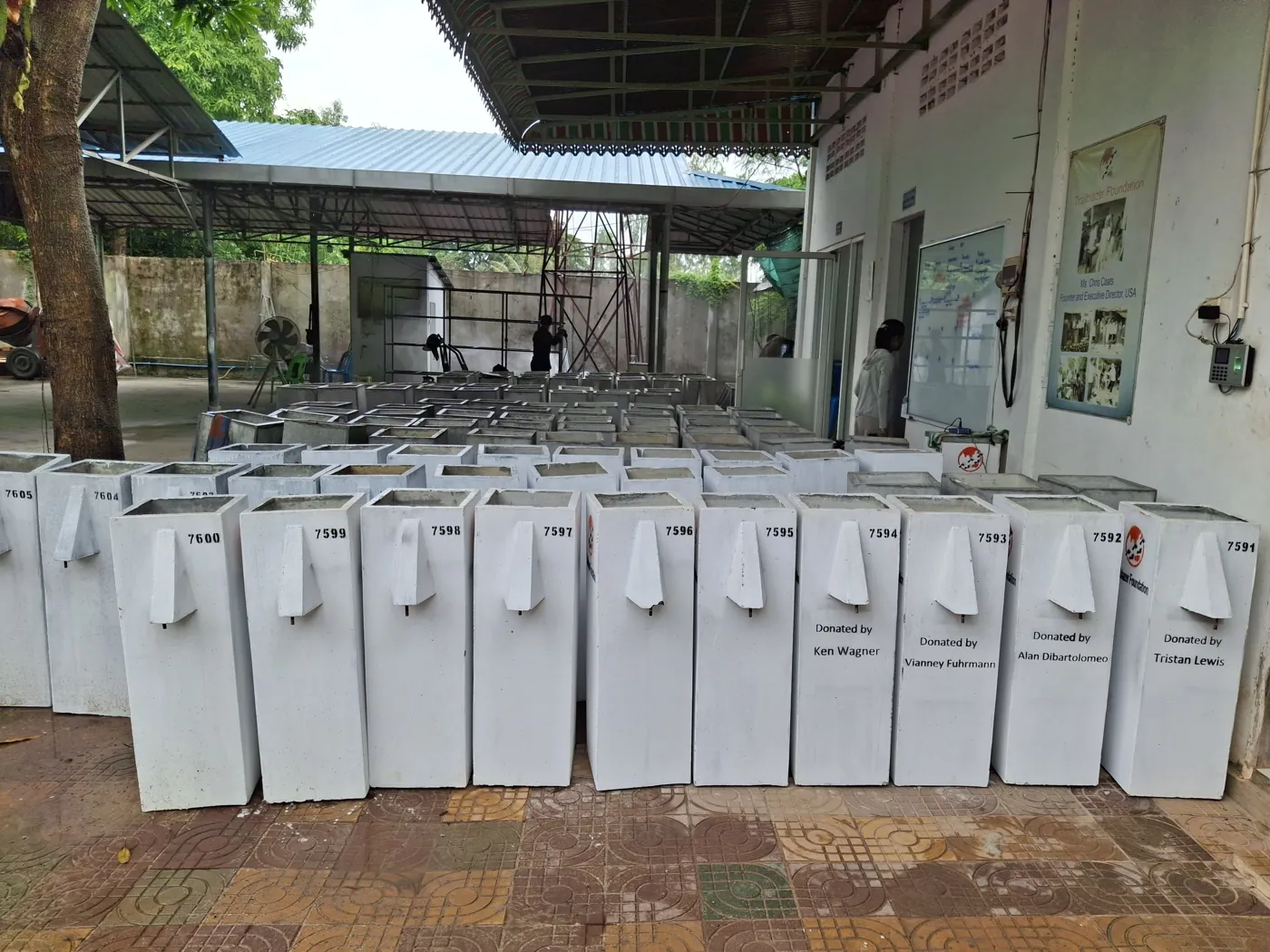
Biosand filtration
A biosand filter is a concrete or plastic container packed with layered sand and gravel. What makes it work isn’t the sand alone. It’s the “schmutzdecke,” a living biological layer that grows at the top of the sand bed and consumes organic contaminants and pathogens as water passes through. It is a household appliance you build once, from local materials, and use for a generation.
The upside is durability at near-zero running cost: no cartridges, no chemicals, a decade-plus life, and maintenance that is just a periodic “swirl-and-dump” of the top sand. The catches are physical and biological. The unit is heavy and permanent, so it doesn’t travel. And the schmutzdecke needs a ~4-week ripening period to mature before the filter reaches full efficacy, so it can’t protect anyone the day it’s installed. Its modest ~85–90% virus reduction means it, too, benefits from a disinfection step where viruses are a real threat.
Head to head
The two filters solve the same core problem (bacteria and protozoa, with no power), but they trade off along different axes: portability and same-day readiness versus permanence and zero consumables.
| Dimension | Gravity hollow-fiber UF | Biosand filter |
|---|---|---|
| Removes | Bacteria ~7-log, protozoa ~6-log | Bacteria >98%, protozoa >99% |
| Viruses | Limited (not a barrier) | ~85–90% only |
| Power | None (gravity) | None (gravity) |
| Lifespan | 100,000+ gal rated; ~5 yr in the field | 10+ years, often decades |
| Annual cost | ~$0.11–$1.46 / person / yr | ~$0.26–$4.02 / person / yr |
| Maintenance | Syringe backflush | Swirl-and-dump top sand |
| Portability | Light, fully portable | Heavy, permanent install |
| Ready when | Immediately | After ~4-week ripening |
| Best for | Dispersed / displaced households | Settled households w/ build support |
Removal rates, lifespans, and per-person costs are drawn from CWH field assessments cross-checked with WHO, US EPA, and CAWST guidance, and match the drinking-water comparison table on our Technical page. Annual costs assume roughly 3.8 L per person per day and spread capital over the system’s life. Actual figures vary with source water, turbidity, scale, and local prices, so treat them as ranges, not guarantees.
Start with the household’s situation, not the spec sheet. Displaced, dispersed, or off-grid with no build support? The portable gravity membrane works the day it arrives. Settled, with construction help and a long horizon? Biosand’s decades-long life with no consumables is the better long-term investment.
Check the pathogen profile. Both handle bacteria (including the ones that cause cholera and typhoid) and protozoa well. If viruses are a documented problem, plan a disinfection step (chlorine or UV) on top of either filter.
Weigh turbidity. Heavily silted surface water fouls membranes fast and clogs sand; a settling or pre-filter step protects both.
The best filter isn’t the one with the tightest pores. It’s the one the family will still be using five years from now, with nothing broken and nothing to buy.
Clean Water Help in the field
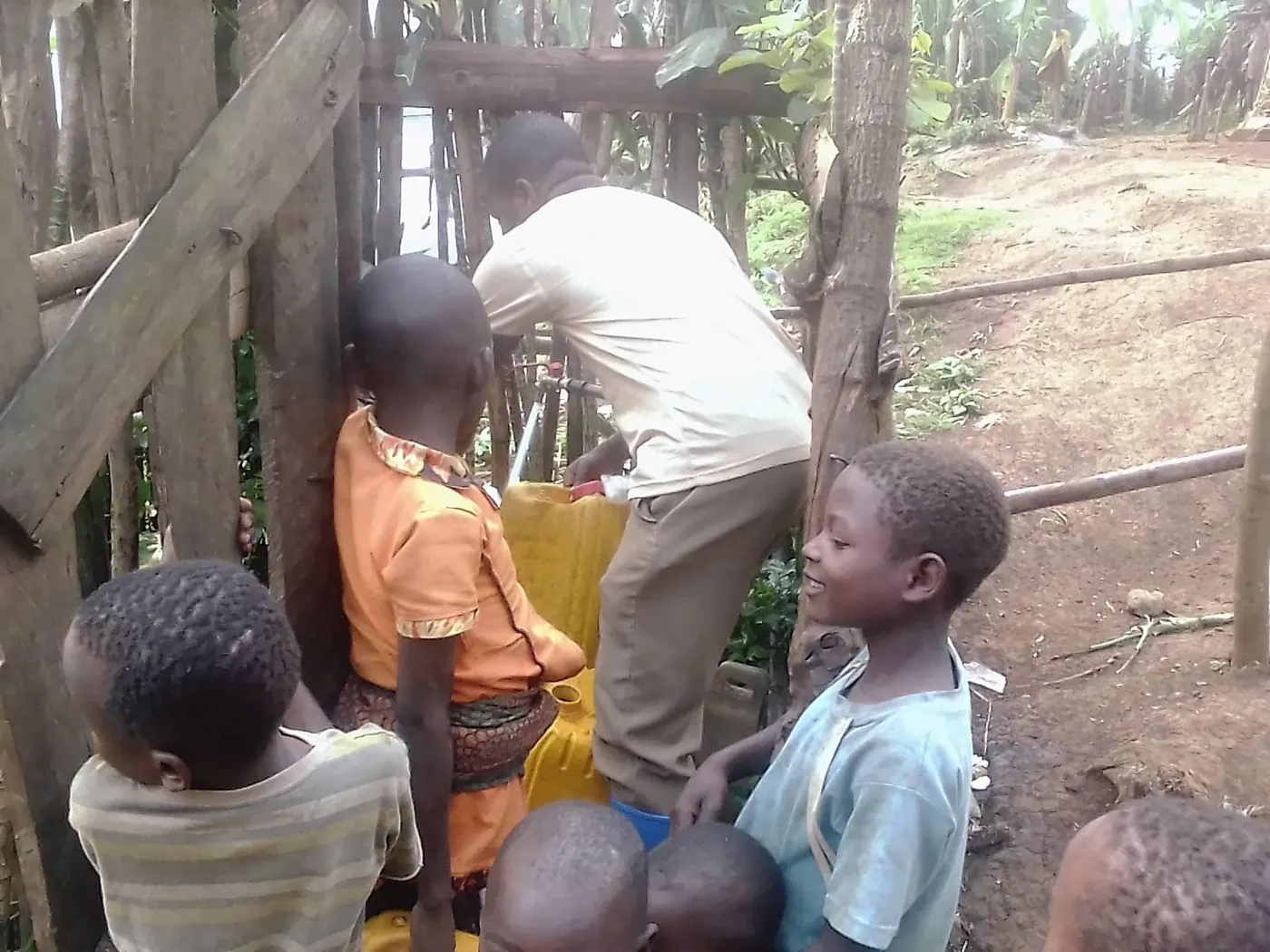
Two of our programs land on opposite sides of this choice, on purpose. In DR Congo (Goma), displaced families need a filter that is portable and works immediately with no consumables, so our partner PALPER installs a Sawyer hollow-fiber membrane filter on a bucket, shared by five households (about 25 people). In Cambodia, settled households with construction support can invest in a household biosand filter, which is heavy, permanent, and durable enough to last a generation with no upkeep cost. Our partner Trailblazer builds and delivers them. Same goal, two deliberately different fits, because the communities are different.
Sources & notes
- Removal, lifespan, and cost figures: Clean Water Help field assessments, cross-checked with WHO, US EPA, and CAWST; summarized in the drinking-water solution table.
- Field examples: DR Congo gravity-membrane program and Cambodia biosand filters.
- Figures are approximate and vary with source water, turbidity, scale, and local prices; verified per-project costs are published on each project page.
Common questions
Do gravity and biosand filters remove viruses?
Not reliably. Gravity hollow-fiber UF is limited against viruses; a mature biosand filter reduces them only ~85–90%. Where viruses are the concern, add a disinfection step (chlorine or UV) or a tighter membrane.
How long does each filter last?
A hollow-fiber cartridge is rated for 100,000+ gallons; with syringe backflushing we plan on about 5 years of field use, the figure behind our DR Congo costs. A biosand filter has no consumable media and lasts 10+ years (often decades) after a ~4-week ripening period.
Which is cheaper to run?
Both are pennies per person. Gravity UF runs under $0.40 per 1,000 gallons (~$0.11–$1.46/person/yr); biosand is ~$100 per unit and ~$0.26–$4.02/person/yr with no recurring media cost.
Related
A household filter can protect a family for years.
We match the filter to the water and the household: portable membrane where families are on the move, durable biosand where they’re settled. Every dollar goes to the field.