Cleaner Water for Communities Affected by Galamsey, Ghana
Small-scale gold mining has polluted rivers in Ghana’s Ashanti Region. With district approvals received in August 2026, Clean Water Help and Nyankonton Aid Foundation are preparing community-made heavy-metal filters and mercury-free mining training.
Clean Water Help is a 100% volunteer-run 501(c)(3) nonprofit (EIN 99-0765687). Founders cover all operating costs, so 100% of public donations go to projects. Numbers are current as of September 28, 2026. Photos are shared by partners with permission; names of private individuals are withheld. impact@cleanwaterhelp.org
At a glance
1 Executive summary
Nyankonton Aid Foundation (NAF) works to restore rivers and livelihoods damaged by galamsey. CWH met NAF in January 2026 and agreed that a small pilot was the right first step. In February, CWH sent NAF a signed partnership letter for local authorities, with four objectives: identify and rank the toxins, make drinking water safer, reduce exposure through food, and reduce mercury and cyanide use.
In August 2026, Atwima Kwanwoma District issued an official letter of support, Amansie West District accepted the project, and Bekwai Municipal Assembly approved it in principle. The regional Health Directorate supports the work but needs national clearance for a formal letter.
What happens next
- Hold an inception meeting and sign an agreement with the districts.
- Choose one or two pilot communities with NAF.
- Sample water, sediment and fish to find the main exposure pathway.
- Develop and lab-test community filters from local materials.
- Plan mercury-free mining training with AppelGlobal.
Key numbers and how solid they are
Each number is labeled by its basis: Measured counted or tested, Reported reported by a partner or a document, Record from our own payments, contracts and correspondence, Estimate a calculation or assumption, Planned a plan or target, not yet done.
| Item | Value | Basis | Source |
|---|---|---|---|
| Districts approving | Atwima Kwanwoma (letter), Amansie West | Record | NAF, Aug 13, 2026 |
| Approval in principle | Bekwai Municipal Assembly | Record | NAF, Aug 13, 2026 |
| Contaminants of concern | Mercury, arsenic, lead, cadmium | Reported | NAF and literature |
| WHO guideline, inorganic mercury | 6 µg/L | Reported | WHO drinking-water guidelines |
| Budget and beneficiaries | To be set at inception | Planned | CWH/NAF |
2 Background and progress
The problem
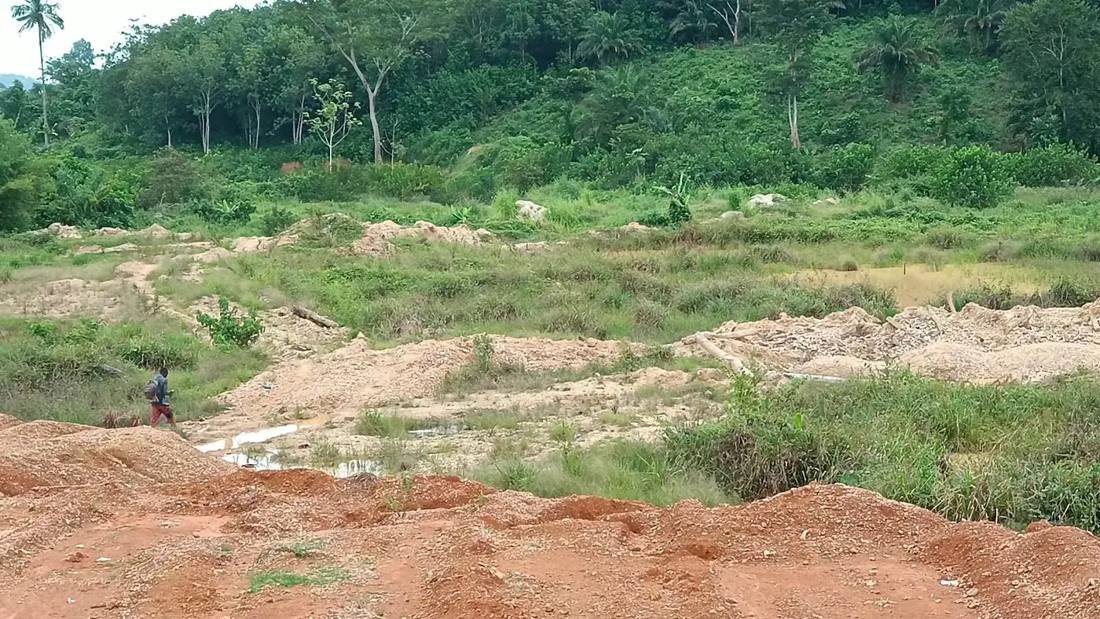
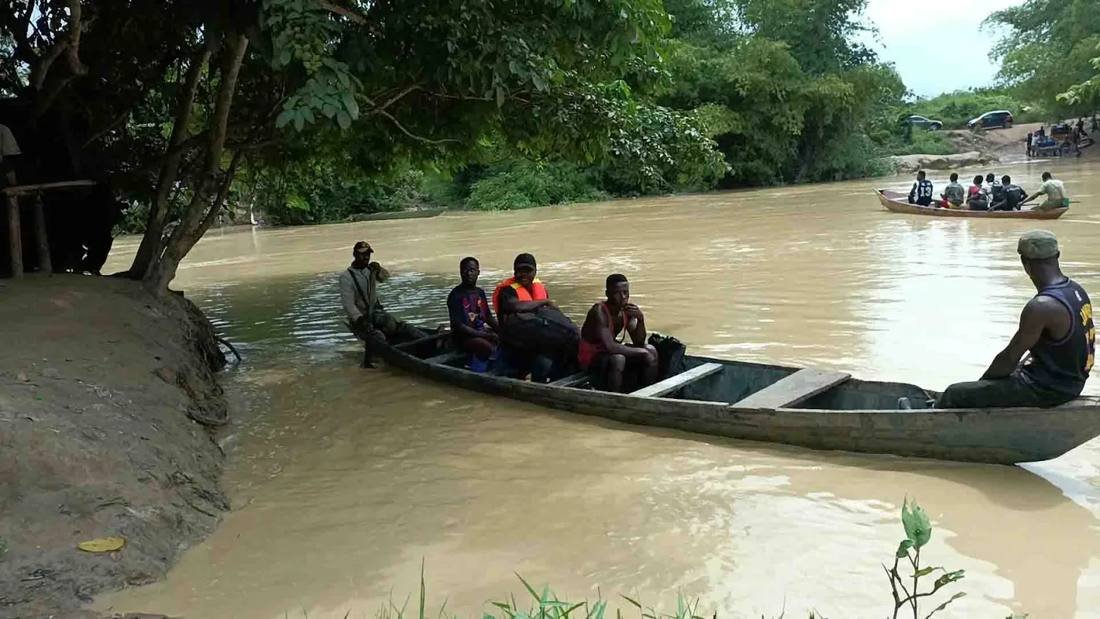
Galamsey is the Ghanaian term for small-scale gold mining, much of it unregulated. In the Ashanti Region it has cleared forest, dug pits, filled rivers with sediment and released mercury and other metals. Communities drink from and fish in these rivers. Health effects reported locally have not yet been measured, which is why testing is the first step.
The partner
Nyankonton Aid Foundation is a Ghanaian foundation based in Kumasi, led by Executive Director Prince Afriyie. It holds a UN SDG partnership, “Restoring Forests, Water Bodies and Livelihoods in Ghana: Tackling Pollution from Galamsey,” and has built relationships with traditional authorities, women’s groups and district assemblies.
Timeline
- Nov 13, 2025Ghana partner search begins.
- Jan 5, 2026CWH contacts NAF.
- Jan 19, 2026First meeting; agree on a pilot in one or two communities.
- Feb 23, 2026CWH partnership letter signed and sent to NAF.
- May 29, 2026Proposal delivered to Bekwai Municipal Assembly and the regional council.
- Jun 8, 2026CWH proposes health screening and community filters as first steps.
- Aug 13, 2026District approvals received.
- Aug 19, 2026CWH offers to sign an agreement and meet the districts.
- NextInception meeting; pilot communities.
3 Technical foundation
Community filter concept
The filter concept builds on proven arsenic filters and adapts them for mixed metals, using materials communities can find or make:
| Layer | Purpose |
|---|---|
| Sand | Holds back particles and sediment |
| Scrap iron filings | Binds arsenic and other metals |
| Biochar from uncontaminated local plants | Adsorbs mercury and organic contaminants |
| Bone char | Captures lead and cadmium |
| Limestone or dolomite (optional) | Raises pH of acidic water |
Filters must drain fully between uses so metals are not released back into the water. Each recipe will be tested before and after filtering at a laboratory.
Mercury-free mining
Gravity methods (sluicing, panning and direct smelting with borax) recover gold without mercury. Our partner AppelGlobal has helped more than 500 Philippine mines make this switch. Training in Ghana will focus on recovery and income, because miners adopt what pays.
Decisions and the options we set aside
| Decision | Options considered | Why |
|---|---|---|
| Start with a small pilot | Region-wide program | Prove the filters and approach in one or two communities first. |
| Local materials | Imported commercial media | Cheaper and sustainable; communities can make more themselves. |
| Test before promoting | Distribute filters immediately | A filter that does not remove the local metals gives false confidence. |
Risks and how we respond
| Risk | Level | Response |
|---|---|---|
| Government processes slow the start | Medium | Work through district assemblies that have approved the project. |
| Filters underperform for some metals | Medium | Lab testing; adjust recipes. |
| Lab testing costs | Medium | Seek grants; partner labs. |
| Association with illegal mining | Medium | Work with communities and legitimate small-scale miners only. |
4 What we learned and what is still open
- Approvals take time. It took from February to August 2026 to secure district support; that groundwork makes the pilot possible.
- Cross-learning helps. Methods proven in the Philippines can be adapted for Ghana.
Open questions
- Is drinking water or fish the main mercury exposure route in the pilot communities?
- Which local biochar sources work best and are not contaminated?
- Which Ghanaian laboratories can test metals affordably?
5 How you can help
Help communities clean up their water
Gifts fund testing, filter materials and lab analysis. Mercury and mining experts are welcome to join the team.
- Contact: impact@cleanwaterhelp.org
References and sources
- Nyankonton Aid Foundation. UN SDG Partnership: Restoring Forests, Water Bodies and Livelihoods in Ghana (sdgs.un.org).
- Clean Water Help and NAF. Proposal for Collaborative Partnership (February 23, 2026).
- Atwima Kwanwoma District Assembly. Letter of acceptance and support (August 2026).
- World Health Organization. Guidelines for Drinking-water Quality.